AI Email Deliverability: Boost Your Inbox Success

In today's hyper-connected world, email remains a cornerstone of professional communication and business operations. Yet, the digital landscape is increasingly crowded, and the battle for inbox real estate is fiercer than ever. For businesses, entrepreneurs, and sales professionals, ensuring that crucial messages don't end up lost in spam folders or promotional tabs is not just a technical challenge – it's a direct determinant of engagement, lead conversion, and ultimately, revenue. This is where the power of Artificial Intelligence (AI) is stepping in, revolutionizing ai email deliverability and transforming how we ensure our messages reach their intended audience.
The sheer volume of emails sent daily is staggering, with billions sent across the globe every hour. Internet Service Providers (ISPs) and email clients employ sophisticated algorithms to filter this deluge, protecting users from spam and unwanted content. While this is essential for user experience, it creates a significant hurdle for legitimate senders. Understanding and navigating these complex filtering systems can feel like a constant, uphill battle. Fortunately, advancements in email AI are providing powerful new ways to monitor, analyze, and optimize every aspect of the email sending process, ensuring your communications cut through the noise.
This article will delve deep into the critical role of AI in enhancing email deliverability. We'll explore how AI-powered tools can meticulously analyze sending patterns, predict potential issues before they impact your reputation, and proactively manage your sender score to guarantee your emails land squarely in the inbox. From the technical intricacies of content optimization and recipient engagement analysis to the importance of authentication protocols, we'll cover the essential components of AI inbox optimization. Furthermore, you'll discover practical, actionable strategies for leveraging AI to dramatically improve your email campaign success, reduce costly bounce rates, and boost overall inbox management AI efficiency. Whether you're an entrepreneur looking to scale, a sales professional aiming to connect with more leads, or part of an IT department tasked with maintaining communication integrity, understanding AI's impact on deliverability is no longer optional – it's crucial for effective communication and sustained business growth.
How AI is Revolutionizing Email Deliverability Monitoring
Historically, monitoring email deliverability has been a labor-intensive, reactive process. Marketers and IT professionals would often only discover a problem when complaint rates spiked, bounce rates soared, or response metrics plummeted. This reactive approach meant that damage to sender reputation could already be significant by the time issues were identified. AI is fundamentally changing this paradigm by shifting the focus from reaction to prediction and prevention.
AI algorithms excel at processing vast datasets and identifying subtle patterns that are invisible to the human eye. In the context of email deliverability, this means AI can continuously monitor a multitude of factors in real-time:
- Sending Volume and Cadence: AI can detect unusual spikes or dips in sending volume that might trigger spam filters. It can also analyze the consistency of your sending schedule, identifying deviations that could signal a compromised account or a change in sending behavior.
- Recipient Engagement Patterns: Beyond simple open and click rates, AI can analyze more nuanced engagement signals. This includes how quickly recipients respond, whether they move emails from the promotions tab to the primary inbox, or if they add senders to their contact list. These actions are strong indicators to ISPs that your emails are valued.
- Content Analysis: AI can scan email content for spam trigger words, excessive capitalization, misleading subject lines, or problematic link structures that might cause filters to flag your messages.
- Bounce and Complaint Rates: While these are traditional metrics, AI can analyze them with greater granularity, identifying specific types of bounces (hard vs. soft) or pinpointing commonalities among recipients who complain, helping to diagnose the root cause more effectively.
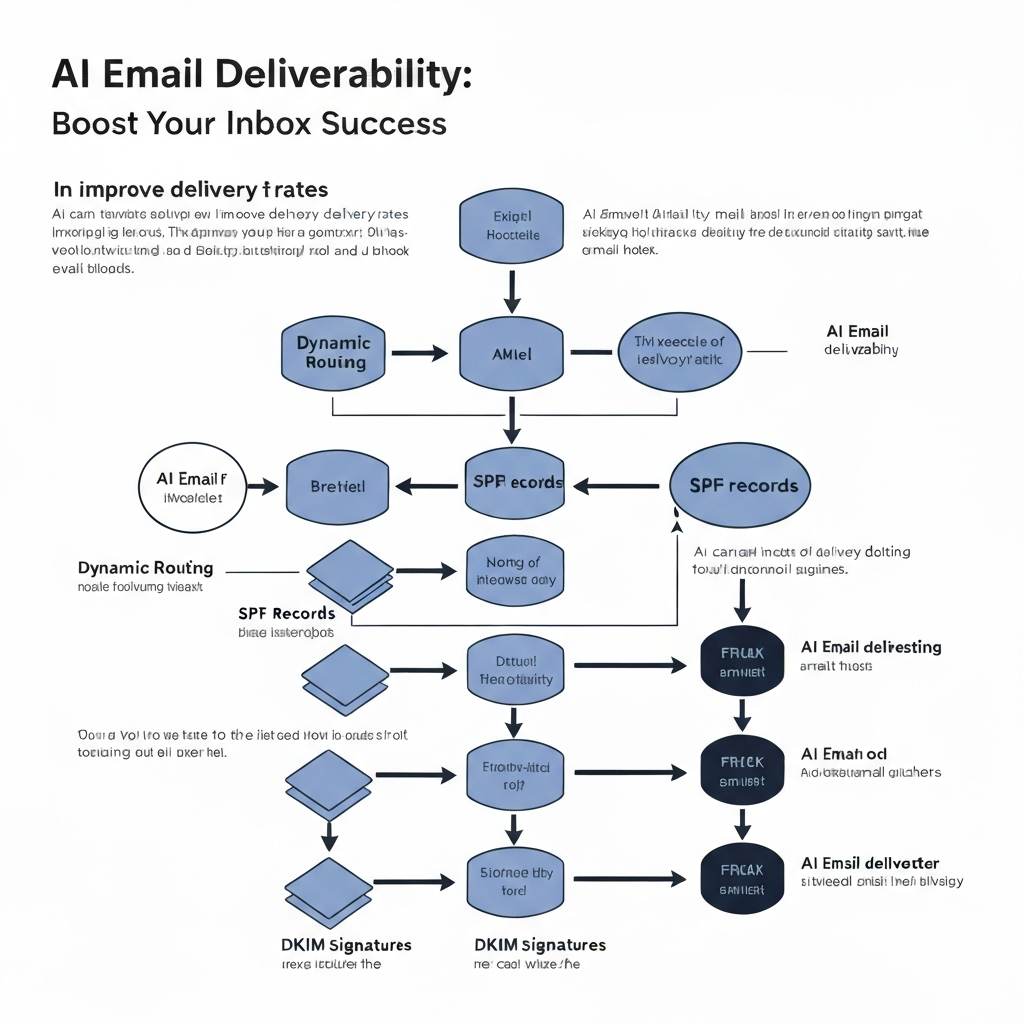
- Authentication Protocol Health: AI tools can continuously monitor the status and effectiveness of crucial authentication protocols like SPF, DKIM, and DMARC, alerting you to any misconfigurations or potential spoofing attempts.
By constantly analyzing these interconnected data points, AI-powered systems can predict potential deliverability issues before they escalate. For instance, a gradual increase in soft bounces from a specific domain, combined with a slight dip in engagement from that same segment, might be flagged by AI as an early warning sign of an impending deliverability problem. This proactive monitoring allows businesses to adjust their strategies, clean their lists, or refine their content before their sender reputation is significantly damaged. This level of continuous, intelligent oversight is precisely what's needed to maintain optimal AI email sender reputation in today's dynamic email ecosystem. The complexity of navigating ISP requirements, such as those of Gmail and Microsoft, is immense, and AI helps demystify these by applying learned best practices diligently.
AI-Powered Content Optimization for Better Inbox Placement
The content of your email is one of the most direct factors influencing whether it lands in the inbox or the spam folder. While we often think of deliverability as a technical or backend issue, the words, formatting, and links within your message play a critical role. This is an area where email engagement AI can provide significant advantages.
AI tools can analyze email content with a sophistication that goes far beyond simple keyword scanning:
- Spam Trigger Word Detection: AI can identify words or phrases commonly associated with spam, such as "free money," "act now," or excessive use of exclamation points. However, AI is smart enough to understand context, so it won't necessarily flag legitimate marketing copy that happens to include a common term.
- Subject Line Analysis: The subject line is your first impression. AI can analyze its effectiveness based on historical open rates, predict potential click-through rates, and suggest variations that are more likely to capture attention and avoid spam filters. It can identify patterns in successful subject lines for your specific audience.
- Tone and Readability: AI can assess the overall tone of your email, ensuring it aligns with your brand and doesn't come across as overly aggressive, demanding, or deceptive. It can also evaluate readability scores, ensuring your message is clear, concise, and easy for recipients to digest.
- Personalization Effectiveness: Modern AI can analyze the level of personalization in your emails. Generic, mass-sent messages are less likely to engage recipients and may be treated with suspicion by ISPs. AI can help identify opportunities to tailor content, ensuring that each recipient feels the message is relevant to them. This is particularly vital for AI for sales emails, where personalization can make or break a connection.
- Link Analysis: AI can scan for suspicious or broken links, links to known spammy domains, or excessively long, obfuscated URLs that might be flagged by filters.
By integrating AI into your content creation workflow, you can proactively optimize your messages for inbox placement. Instead of guessing which subject line might perform best or which phrases to avoid, AI provides data-driven recommendations. Tools can suggest A/B testing variations for subject lines or body copy, allowing you to continually refine your approach based on real-world performance. This intelligent content optimization ensures that your message is not only delivered but also resonates with the recipient, improving engagement and reinforcing positive sender reputation signals.
Leveraging AI to Understand and Improve Sender Reputation
Your sender reputation is arguably the most critical factor determining email deliverability. It's a score assigned by ISPs based on your sending history and practices, influencing how they treat your incoming emails. A strong reputation means your emails are likely to reach the inbox; a poor one means they'll end up in spam or be rejected outright. Maintaining and improving this reputation is an ongoing challenge, but AI offers unprecedented capabilities in this domain.
AI systems can provide deep insights into the complex factors that constitute sender reputation:
- IP and Domain Reputation Monitoring: AI tools can continuously track your IP address and domain reputation scores from various data sources and ISPs. They can identify negative trends, correlate them with specific sending activities, and provide alerts when your reputation begins to decline. This is crucial for understanding your overall AI email sender reputation.
- Authentication Protocol Management: Ensuring your email authentication protocols are correctly set up and functioning is non-negotiable. AI can help verify that your SPF (Sender Policy Framework), DKIM (DomainKeys Identified Mail), and DMARC (Domain-based Message Authentication, Reporting & Conformance) records are properly configured and actively protecting your domain from spoofing. Some advanced tools can even monitor DMARC reports to identify potential unauthorized sending.
- Identifying Sending Anomalies: AI can detect subtle changes in your sending patterns that might indicate a compromised account or unauthorized use of your domain. For example, a sudden surge in emails sent from an unusual geographic location or at odd hours could be an early indicator of a security breach, which would severely impact your reputation if not addressed.
- Bounce and Complaint Analysis: AI can go beyond simply reporting bounce and complaint rates. It can analyze the *types* of bounces (e.g., invalid recipients, full mailboxes, blocked by server) and identify patterns in complaints. This granular analysis helps pinpoint specific issues, such as poor list hygiene or sending to unengaged recipients.
- Predictive Reputation Scoring: Some AI platforms can predict future reputation trends based on current sending behavior and historical data. This forward-looking insight allows businesses to take corrective actions proactively, rather than waiting for a reputation to deteriorate significantly.
By leveraging AI for sender reputation management, businesses can move from a reactive stance to a proactive one. Instead of waiting for delivery issues to arise, they can use AI-driven insights to continuously optimize their sending practices. This includes strategies like warming up new IP addresses gradually, segmenting lists to send targeted campaigns to engaged users, and ensuring all technical configurations are robust. For instance, consistently maintaining a high email sender score is vital, and AI provides the analytical power to achieve this. This focus on reputation is fundamental to any successful AI email strategy.
AI's Role in Analyzing Recipient Engagement and Predicting Deliverability
Beyond the technical aspects of sending and reputation, the ultimate measure of email success is recipient engagement. Do people open your emails? Do they click on your links? Do they reply? ISPs pay close attention to these signals, using them as strong indicators of whether your emails are providing value or are simply cluttering inboxes. AI has become indispensable in understanding and acting upon these engagement metrics.
Here's how AI analyzes recipient engagement to predict and improve deliverability:
- Granular Engagement Tracking: AI can track a wide array of engagement signals, far beyond basic opens and clicks. This includes:
- Reply Rate: A direct reply is a powerful positive signal.
- Forwarding: Indicates content that recipients find shareable and valuable.
- "Mark as Not Spam" Actions: A strong indicator that a recipient wants to receive your emails.
- "Add to Contacts" Actions: Shows a recipient's intent to engage further with your communications.
- Time Spent Reading: Some advanced AI can estimate how long an email is viewed.
- Moving Emails: Observing if recipients move emails from promotional tabs to the primary inbox, or vice versa, provides insight into perceived relevance.
- Predictive Engagement Scoring: By analyzing historical engagement data across your subscriber base, AI can predict which subscribers are most likely to engage with future emails and which are at risk of becoming disengaged. This allows for more targeted sending strategies.
- Identifying Engagement Drop-offs: AI can detect subtle declines in engagement metrics for specific segments or campaigns. A decrease in opens or clicks from a particular demographic or region might signal a need to re-evaluate content relevance or segmentation for that group. This predictive capability is crucial for maintaining high deliverability rates.
- Optimizing Send Times: AI can analyze when different segments of your audience are most likely to engage with emails and suggest optimal send times to maximize opens and clicks, thereby improving overall engagement scores.
- List Segmentation and Hygiene: Based on engagement patterns, AI can help you identify your most valuable subscribers and those who are likely to be inactive or unengaged. This insight is critical for effective list segmentation and for implementing strategies to re-engage or remove unengaged contacts, which directly impacts deliverability. For instance, understanding the reply speed impact can inform how quickly you follow up on leads.
By understanding these nuanced engagement signals, AI helps businesses send more relevant, timely, and valuable content. This not only boosts conversion rates but also sends powerful positive signals to ISPs, reinforcing your sender reputation and ensuring your emails are more likely to reach the inbox. This focus on recipient value is a cornerstone of effective AI email strategy and is essential for long-term deliverability success. For busy professionals, managing these complex interactions can be overwhelming, which is why utilizing advanced tools is so beneficial.
Actionable AI Strategies for Businesses to Enhance Email Deliverability
Implementing AI for email deliverability isn't just about adopting new technology; it's about integrating intelligent strategies into your overall communication workflow. For entrepreneurs, sales teams, and IT departments, leveraging AI can lead to significant improvements in efficiency and effectiveness.
Here are actionable AI strategies to boost your email deliverability:
- Implement Proactive Monitoring with AI Tools:
- Strategy: Instead of waiting for issues, use AI-powered platforms to continuously monitor your sender reputation, IP health, bounce rates, and complaint levels in real-time.
- Action: Integrate tools that provide predictive alerts for potential deliverability problems. For example, if a new sending pattern emerges or complaint rates tick up, you're notified instantly. This is key for maintaining a healthy AI email sender reputation.
- Leverage AI for Intelligent List Segmentation and Hygiene:
- Strategy: AI can analyze subscriber data to identify segments with varying engagement levels. It can also help identify inactive or unengaged subscribers who might be harming your sender reputation.
- Action: Use AI insights to segment your lists for more targeted campaigns. Run re-engagement campaigns based on AI predictions, and confidently remove subscribers who consistently show low engagement. This reduces your sending volume to uninterested parties, a crucial step before you even think about how to unsubscribe from emails in bulk for list cleaning.
- Optimize Email Content with AI Assistance:
- Strategy: Ensure your email copy and subject lines are engaging, relevant, and compliant with ISP guidelines.
- Action: Utilize AI tools that analyze subject lines for predicted performance and scan body content for spam triggers or readability issues. For sales teams, this means crafting more effective AI for sales emails that resonate.
- Automate and Refine Sending Schedules:
- Strategy: Send emails when your audience is most likely to engage.
- Action: Employ AI that analyzes engagement patterns across different time zones and user segments to suggest or automatically adjust send times for maximum impact. This contributes to better email engagement AI.
- Strengthen Email Authentication and Security:
- Strategy: Ensure robust technical foundations for your email sending.
- Action: Use AI tools that help monitor and manage SPF, DKIM, and DMARC. These protocols are vital for verifying your identity and preventing spoofing, which directly protects your sender reputation and contributes to overall AI inbox optimization.
- Integrate AI for Comprehensive Email Management:
- Strategy: Streamline your entire email communication process, from drafting to sending and analysis.
- Action: For professionals juggling countless communications, managing email efficiently is paramount. Tools that offer advanced capabilities, such as an ai executive assistant, can significantly streamline workflows, automate repetitive tasks, and provide insights that extend beyond simple deliverability, contributing to overall inbox success. This can significantly improve your communication workflow optimization.
- Focus on Building Genuine Engagement:
- Strategy: Shift from purely transactional emails to building relationships.
- Action: Use AI to personalize messages at scale, ensuring content is relevant to the recipient's interests or stage in the buyer journey. This focus on value drives positive engagement signals that ISPs favor. This approach complements tools like a best email tracker for Gmail, by ensuring what you track is worth tracking.
By adopting these AI-driven strategies, businesses can systematically improve their email deliverability, ensuring their messages connect with their intended audience, drive better results, and contribute to overall business growth. This strategic use of AI transforms email from a potential liability into a powerful, reliable communication channel. It's also about enhancing productivity, much like how Gmail automation or an Outlook AI assistant can save time.
Choosing the Right AI Tools for Email Deliverability Management
The market for AI-powered tools is rapidly expanding, and selecting the right solution for your email deliverability needs can seem daunting. However, by focusing on key features and functionalities, you can identify tools that will provide the most value and effectively support your AI email strategy.
When evaluating AI tools for email deliverability, consider the following:
- Comprehensive Monitoring Capabilities: The tool should offer real-time monitoring of key deliverability metrics, including inbox placement rates, bounce rates, spam complaint rates, and sender reputation scores across major ISPs. Look for features that provide historical data and trend analysis.
- Predictive Analytics: The most effective AI tools don't just report on past performance; they predict future issues. Features that can forecast potential deliverability problems based on current trends or unusual activity are invaluable for proactive management.
- Content Analysis and Optimization: Does the tool offer insights into subject line performance, spam trigger words, and overall content effectiveness? The ability to receive AI-driven recommendations for improving content is a significant advantage.
- Sender Reputation Management: Look for tools that provide detailed insights into your IP and domain reputation, as well as help in managing and verifying authentication protocols like SPF, DKIM, and DMARC.
- Recipient Engagement Analysis: The platform should go beyond basic open/click rates to analyze more sophisticated engagement signals like replies, forwards, and "add to contacts." Understanding these metrics is key to improving email engagement AI.
- Integration Capabilities: Ensure the tool can integrate seamlessly with your existing email service provider (ESP), CRM, or other marketing automation platforms. This allows for a more unified view of your data and smoother workflow.
- User-Friendly Interface and Reporting: The AI should provide clear, actionable insights through intuitive dashboards and easy-to-understand reports. Complex data should be presented in a way that empowers decision-making, not overwhelms the user.
- Scalability and Support: As your business grows, your email sending volume and complexity will likely increase. Choose a tool that can scale with your needs and offers reliable customer support.
- Focus on Specific Needs: While many tools offer broad deliverability services, some excel in specific areas. For instance, some tools might be particularly strong in AI for sales emails, while others focus more on high-volume marketing campaigns.
Platforms that offer a holistic approach, combining monitoring, analysis, and actionable recommendations, are often the most effective. For businesses looking to streamline their entire email ecosystem, tools that integrate advanced AI features are becoming essential. For example, when considering how to manage complex communication workflows or seeking advanced assistance, tools like an ai executive assistant can be invaluable in optimizing your overall email strategy and achieving superior AI inbox optimization.
Conclusion: The Future of AI in Ensuring Inbox Success
Email deliverability is no longer a simple technical hurdle; it's a strategic imperative for any business that relies on digital communication. As the volume of emails continues to grow and filtering technologies become more sophisticated, the challenge of reaching your audience's inbox becomes increasingly complex. This is precisely where the transformative power of Artificial Intelligence shines.
AI is revolutionizing ai email deliverability by moving us from a reactive, often manual process to a proactive, data-driven, and predictive approach. From meticulously monitoring sender reputation and optimizing email content to deeply analyzing recipient engagement signals, AI equips businesses with the intelligence needed to navigate the intricacies of ISP filters and connect effectively with their audience. Tools leveraging email AI empower professionals to understand subtle patterns, predict potential issues, and implement strategies that ensure their messages are not only sent but are also received and acted upon.
The benefits are clear: reduced bounce rates, improved open and click-through rates, enhanced sender reputation, and ultimately, more successful campaigns and stronger customer relationships. For entrepreneurs, sales teams, and IT departments alike, embracing AI in email deliverability is not just about staying ahead of the curve; it's about ensuring the fundamental effectiveness of your communication channels. As we look to the future, AI will undoubtedly become even more integrated into every facet of email management, driving greater efficiency, personalization, and guaranteed inbox success.
Don't let your critical messages get lost in the digital noise. Explore the AI-powered solutions available today and start building a more robust, reliable, and responsive email communication strategy. The future of your inbox success depends on it.
Frequently Asked Questions
