AI Virtual Agent: Boost Your Business Email Productivity
In today's fast-paced business world, the humble email inbox has become a battleground. Notifications ping incessantly, an avalanche of messages threatens to bury productive work, and the sheer volume can feel utterly overwhelming. Professionals are spending hours each day just managing their emails, leading to decreased efficiency, missed opportunities, and a pervasive sense of digital exhaustion. Studies consistently show that the average business professional receives well over 100 emails per day, and a significant portion of their workday is dedicated solely to reading, sorting, and responding. This "email overload epidemic" isn't just an annoyance; it's a critical drain on productivity, creativity, and employee well-being. But what if there was a smarter way to tame this digital beast? Enter the AI virtual agent – a sophisticated solution poised to revolutionize how we handle our business communications.
What is an AI Virtual Agent for Email?
An AI virtual agent, particularly one designed for email management, is far more than a simple auto-responder or a basic chatbot. It's an intelligent software program that leverages cutting-edge artificial intelligence (AI) and machine learning (ML) to understand, process, and manage your email communications autonomously. Unlike traditional automation tools that follow rigid, pre-programmed rules, AI virtual agents can interpret the context, sentiment, and intent behind emails. They use Natural Language Processing (NLP) to "read" and understand the content of messages, much like a human assistant would, but at a scale and speed impossible for humans alone.
Think of it as a digital assistant that lives within your inbox, capable of learning your preferences, understanding your priorities, and taking proactive steps to keep your communications organized and actionable. These agents are designed to interact with users in a conversational manner, providing real-time assistance and executing tasks. As described by Calltrackingmetrics, a virtual agent is a "software program that often uses artificial intelligence (AI) and follows scripted rules to provide answers, guidance, and more." However, advanced AI virtual agents for email go beyond simple rule-following, employing sophisticated AI models to adapt and learn. Microsoft 365 highlights that common types of AI virtual assistants include "productivity assistants—help draft content," which is a core function these email-focused agents excel at, alongside much more.
These intelligent systems are built to handle the complexities of modern email, differentiating between a critical client request and a promotional newsletter, or understanding the urgency of a project update versus a general inquiry. They are a key component in the broader landscape of AI productivity tools, specifically tailored to address the unique challenges of email overload.
Key Features and Capabilities of AI Email Agents
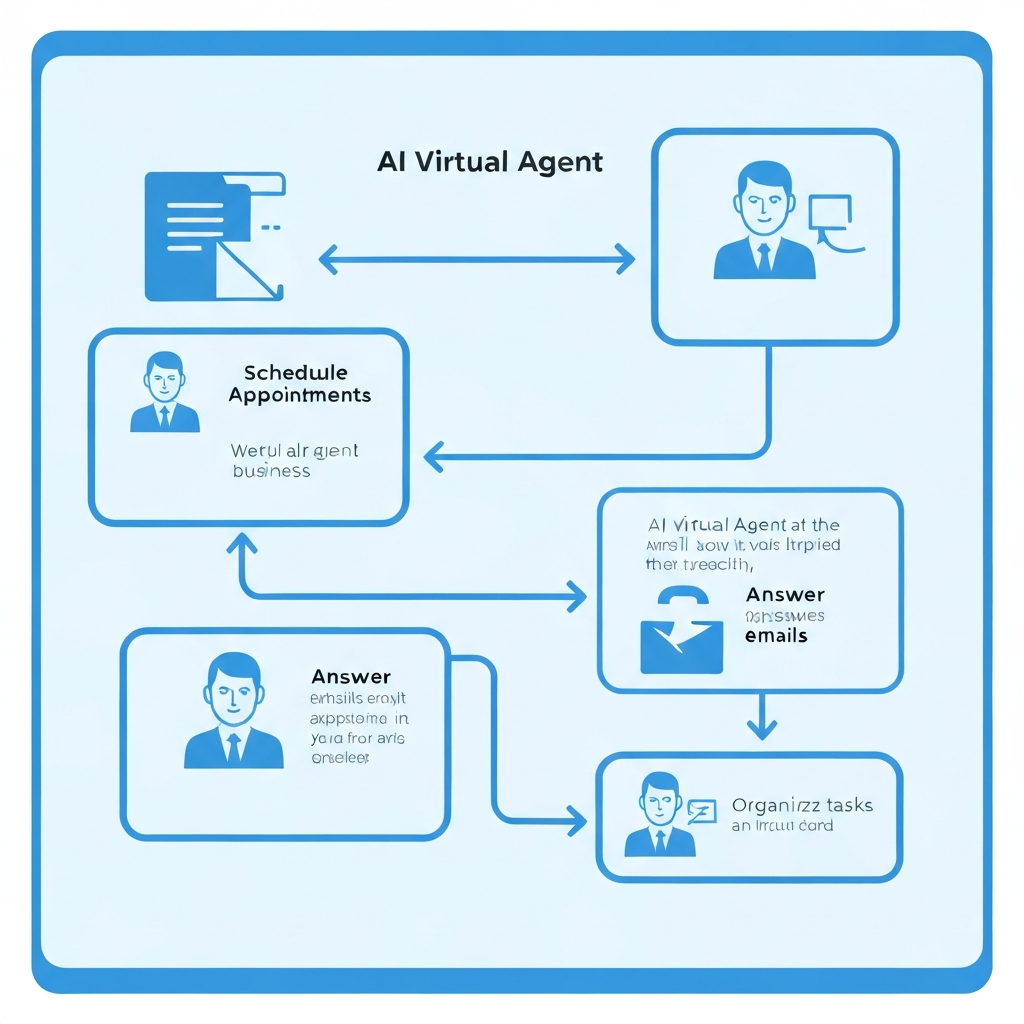
The power of an AI virtual agent lies in its diverse set of intelligent capabilities, designed to transform a chaotic inbox into a streamlined communication hub. These agents go beyond basic filtering, offering a suite of features that automate and optimize email management tasks:
- Intelligent Prioritization and Sorting: Perhaps the most impactful feature is the agent's ability to understand the importance and urgency of incoming emails. Using AI, it can analyze sender reputation, keywords, sentiment, and historical interactions to categorize emails, flagging critical messages while deferring less important ones. This helps users focus on what truly matters, moving them closer to achieving AI for inbox zero by ensuring high-priority items are always at the forefront.
- Automated Response Generation and Drafting: Many AI agents can draft responses to common inquiries or even generate personalized replies based on the email's content and your past communication style. This feature significantly speeds up response times and reduces the manual effort required for repetitive replies, exemplifying true AI email automation.
- Scheduling and Calendar Management: These agents can parse meeting requests, check your availability, and propose suitable times, often directly within the email thread. They can also manage acceptances and rejections, synchronizing with your calendar to prevent double-bookings and save immense coordination time.
- Task Creation and Delegation: Actionable items buried within emails can be automatically identified and converted into tasks. The AI can then help assign these tasks to team members, add them to project management software, or create reminders for yourself, ensuring nothing falls through the cracks. This is a crucial aspect of effective email management AI.
- Information Extraction and Summarization: Long email threads can be daunting. AI agents can intelligently summarize lengthy conversations, extract key decisions, action items, or important data points, presenting them in a concise format. This allows you to grasp the essence of a conversation without reading every single message.
- Smart Filtering and Organization: Moving beyond basic spam filters, AI agents can learn to categorize emails based on projects, clients, departments, or any custom criteria you define. This makes finding specific information much faster and keeps your inbox tidy and organized.
- Follow-up Reminders: The agent can be programmed to remind you or your team about emails that require a follow-up, ensuring timely communication and preventing missed deadlines.
By automating these often tedious automate email tasks, an AI virtual agent liberates professionals from the constant churn of inbox management, allowing them to dedicate more time to strategic initiatives.
How AI Virtual Agents Enhance Business Productivity
The integration of an AI virtual agent into your daily workflow isn't just about having a smarter inbox; it's about unlocking significant gains in overall business productivity. By offloading the cognitive and manual burden of email management, these tools empower individuals and teams to work more efficiently and effectively.
- Substantial Time Savings: Professionals can reclaim hours each week. Imagine reducing the time spent on sorting, reading, and responding to emails by 30-50%. This reclaimed time can be redirected towards core job functions, client engagement, strategic planning, or skill development. This is where the promise of AI productivity tools truly shines.
- Reduced Cognitive Load and Stress: Constantly switching contexts to deal with email notifications fragments attention and increases mental fatigue. An AI agent acts as a buffer, filtering out noise and presenting information in a digestible way, thereby reducing stress and preventing burnout. This leads to improved focus and decision-making.
- Improved Communication and Responsiveness: Faster processing of emails means quicker responses to clients, partners, and colleagues. This enhanced responsiveness can significantly boost customer satisfaction and strengthen business relationships. A prompt reply speed impact is often directly correlated with business success, making efficient email handling crucial. (Learn more about the reply speed impact on your business).
- Minimized Errors and Missed Information: Human error is inevitable, especially when dealing with high volumes of information. AI agents are designed for accuracy and consistency, ensuring that important details, action items, and deadlines are not missed. They help maintain an organized system that supports clarity.
- Enhanced Focus on Strategic Work: By automating routine tasks, AI virtual agents free up valuable mental bandwidth. Professionals can shift their focus from administrative minutiae to higher-value activities that drive innovation, growth, and strategic objectives.
- Better Organization and Streamlined Workflows: The ability to automatically sort, categorize, and manage emails leads to a cleaner, more organized inbox. This improved organization directly contributes to more efficient workflows and easier retrieval of information, making tasks like finding documents or past conversations much simpler. It's a significant step towards achieving AI for inbox zero.
- Cost-Effectiveness: For many businesses, implementing an AI virtual agent can be a more cost-effective solution than hiring additional administrative staff to manage email volume, offering a robust return on investment through increased output and efficiency. These represent powerful business email solutions for modern organizations.
Ultimately, AI virtual agents empower professionals to regain control of their digital workspace, making email a tool for productivity rather than a source of distraction.
Real-World Use Cases and Success Stories
The transformative power of an AI virtual agent is best understood through its practical applications across various business functions. While specific company success stories are often proprietary, the general impact is consistently positive. Here are some common use cases:
- For Executives and C-Suite: Leaders receive an overwhelming volume of communications. An AI virtual agent can filter out non-essential messages, prioritize urgent requests from board members or key stakeholders, draft routine responses, and even summarize daily email digests. This allows executives to focus on strategic decision-making rather than inbox management.
- For Sales Teams: Sales professionals can leverage AI agents to prioritize leads, automate follow-up reminders, draft initial outreach emails based on prospect profiles, and categorize incoming inquiries from potential clients. This ensures timely engagement and helps sales teams close more deals faster. Tools can also help monitor inbound leads for urgency.
- For Customer Support: AI agents can triage incoming customer queries, categorize them by issue type, and route them to the appropriate support agent or department. They can also generate initial templated responses, provide quick answers to FAQs, and ensure that no customer request is overlooked, significantly reducing average response times.
- For Project Managers: Keeping track of project-related emails, tasks, and decisions can be challenging. An AI agent can automatically extract action items from project threads, assign them to team members, and schedule follow-ups, ensuring projects stay on track and communication remains clear.
- For Small Business Owners: Many small business owners wear multiple hats. An AI virtual agent can act as a crucial support system, handling a significant portion of email administration, allowing owners to focus on growing their business, serving clients, and managing operations.
When considering these tools for your business, it's vital to look for solutions that prioritize security, offer seamless integration with your existing software stack (like CRMs and calendars), and demonstrate measurable productivity gains. As highlighted by Virtualworkforce.ai, a final checklist for choosing the top AI email includes security, integration, measurable productivity gains, and ease of use. Confirming that a system supports audit logs, redaction, and role-based access is crucial for business-grade solutions.
Choosing and Implementing an AI Virtual Agent
Adopting an AI virtual agent is a strategic decision that requires careful consideration to ensure maximum benefit for your business. The right choice can lead to significant productivity boosts, while an ill-fitting one might add complexity. Here’s a guide to choosing and implementing:
Key Considerations When Choosing an AI Virtual Agent:
- Security and Data Privacy: This is paramount for business use. Ensure the platform adheres to strict security protocols, offers data encryption, and complies with relevant privacy regulations (like GDPR). Look for features like audit logs and role-based access control. (Virtualworkforce.ai provides excellent guidance on essential security features).
- Integration Capabilities: The agent should seamlessly integrate with your existing tools – your calendar (Google Calendar, Outlook), CRM (Salesforce, HubSpot), project management software (Asana, Trello), and communication platforms. This ensures data flows smoothly and automates workflows across your ecosystem.
- Customization and Learning: An effective AI agent should be adaptable. Can it learn your specific communication patterns, priorities, and company jargon? Look for platforms that allow for customization of rules, responses, and prioritization logic.
- Ease of Use and User Interface: The tool should be intuitive for your team to adopt. A complex interface or steep learning curve can negate productivity gains.
- Scalability: As your business grows, your AI assistant needs to grow with you. Ensure the platform can handle increasing volumes of emails and users.
- Measurable ROI: The solution should offer analytics that demonstrate its impact on productivity, response times, and efficiency, helping you track the return on your investment.
Steps for Successful Implementation:
- Assess Your Needs: Identify your biggest email pain points. Are you missing deadlines? Is response time slow? Is your inbox overflowing? Define clear objectives for what you want the AI agent to achieve.
- Research and Select: Based on your needs and the considerations above, research available AI virtual agent solutions. Read reviews, compare features, and request demos. When exploring these solutions, consider the advanced capabilities offered by dedicated platforms. For instance, an ai executive assistant can be a powerful asset, designed to handle complex email management and streamline your daily tasks, freeing you to focus on high-level strategy.
- Pilot Testing: Before a full rollout, test the chosen agent with a small group of users (a pilot team). Gather feedback on its performance, ease of use, and effectiveness.
- Training and Onboarding: Provide comprehensive training to your team. Explain how the AI agent works, its benefits, and how to best leverage its features. Address any concerns they might have.
- Integration and Configuration: Work with the vendor or your IT team to integrate the AI agent with your existing software stack and configure its settings according to your business workflows.
- Monitor and Refine: Once deployed, continuously monitor the AI agent's performance. Track key metrics, gather user feedback, and make adjustments as needed to optimize its effectiveness.
By following a structured approach, you can successfully integrate an AI virtual agent and unlock its full potential for enhancing your business email productivity.
The Future of AI in Email Management
The evolution of AI in email management is far from over. We are on the cusp of even more sophisticated capabilities that promise to further redefine professional communication. The current generation of AI virtual agents is already impressive, but the future holds the potential for truly proactive and intelligent assistance.
We can anticipate AI agents becoming even more adept at understanding nuanced language, sentiment, and complex relationships within email conversations. Imagine an AI that not only categorizes emails but also anticipates your needs based on the context of ongoing projects and communications, suggesting relevant documents or proactively scheduling follow-ups. This move towards predictive assistance will be a significant leap. Furthermore, the integration of AI into AI intelligent agents will allow for more seamless orchestration of communication workflows across multiple platforms and channels, not just email.
As AI continues to advance, these agents will likely become more autonomous, capable of handling multi-step communication processes and complex negotiations without direct human intervention for routine parts. This deeper integration and understanding will be key to communication workflow optimization, moving beyond simple task automation to intelligent process management. The goal is to create an environment where communication tools don't just process information but actively contribute to achieving business outcomes. This evolution will make AI productivity tools indispensable for any forward-thinking organization.
Conclusion: Reclaim Your Inbox with AI
The email overload epidemic is a tangible threat to productivity, focus, and well-being in the modern business landscape. The constant barrage of messages consumes precious time and mental energy, diverting professionals from their most critical tasks. However, the advent of the AI virtual agent offers a powerful and transformative solution.
By intelligently sorting, prioritizing, responding, and managing your communications, AI virtual agents significantly boost efficiency, reduce stress, and improve responsiveness. They empower individuals to achieve AI for inbox zero, reclaim hours in their workday, and focus on strategic initiatives that drive business growth. These sophisticated business email solutions are no longer a futuristic concept but a present-day necessity for organizations looking to stay competitive and foster a productive work environment.
The journey to a more productive workday starts with embracing the right tools. Explore how an AI virtual agent can be integrated into your workflow. Take the first step towards taming your inbox, reducing digital overwhelm, and unlocking your full professional potential. Reclaim your time, reclaim your focus, and let AI handle the email chaos.
Frequently Asked Questions
