Boost Engagement with Interactive Email

Is your email marketing campaign feeling a bit... static? In a world where inboxes overflow and attention spans are shorter than ever, traditional, one-way communication often gets lost in the digital noise. You craft compelling subject lines, write engaging copy, and hit send, only to be met with lukewarm open rates and disappointing click-throughs. If this sounds familiar, it's time to explore a powerful evolution in email strategy: interactive email. This isn't just about sending messages; it's about sparking conversations, fostering genuine customer interaction, and transforming passive recipients into active participants. By integrating dynamic elements directly into your emails, you can cut through the clutter, captivate your audience, and drive remarkable results.
What is Interactive Email?
At its core, interactive email is an email message that allows recipients to perform actions or engage with content directly within the email client, without needing to click through to a separate website or landing page. Think of it as bringing a mini-web experience right into the inbox. Unlike standard, static emails that primarily serve as one-way broadcasts, interactive emails are designed for two-way communication and immediate engagement. They leverage advanced email features to create a richer, more dynamic user experience. This shift from passive reading to active participation is what makes interactive emails such a potent tool for modern marketing.
The key characteristic of interactive emails lies in their ability to embed functional elements. Instead of simply linking to a product page, you might embed a product carousel. Instead of linking to a survey, you might embed a feedback form. This immediate gratification and ease of use are fundamental to their effectiveness. They represent a significant leap forward from the standard HTML emails that have dominated marketing for years, offering a more engaging and efficient way to connect with your audience.
Why Choose Interactive Emails?
The benefits of incorporating interactive email elements into your strategy are substantial and directly address common marketing pain points like low engagement and conversion rates. By moving beyond static messages, you unlock a more effective channel for communication and relationship building.
- Boosted Email Engagement: This is perhaps the most significant advantage. When users can interact with content—like answering a poll, browsing a carousel, or playing a GIF—they spend more time with your email. This sustained attention naturally leads to higher email engagement rates. Studies and industry reports consistently show that interactive elements capture attention far more effectively than static images or text alone, helping your message stand out in a crowded inbox. For instance, interactive emails can increase engagement rates by up to 60% compared to standard emails.
- Higher Click-Through Rates (CTR): When recipients are already actively engaged within the email, they are more likely to take the next step. Interactive elements can act as a gateway to deeper engagement. For example, a user who interacts with a product carousel might be more inclined to click through to view specific items. This direct pathway from interaction to action significantly boosts your CTR.
- Improved Customer Satisfaction and Experience: Interactive emails offer a more enjoyable and less frustrating user experience. Instead of being bombarded with links that take them away from their current context, users can accomplish tasks or get information quickly and easily within the email itself. This seamless experience contributes to higher customer satisfaction and a more positive brand perception.
- Richer Data Collection and Insights: Interactive elements like polls, quizzes, and embedded forms provide invaluable first-party data directly from your audience. You can gather preferences, feedback, and behavioral insights with minimal effort from the recipient. This rich data allows for better segmentation, more informed decision-making, and a deeper understanding of your customer base.
- Increased Conversion Rates: By enabling direct actions within the email, such as adding items to a cart or signing up for an event, interactive emails can directly drive conversions. This streamlined process reduces friction, making it easier for customers to complete desired actions, thereby boosting your overall ROI. As noted by FlippingBook, "interactivity has been a top email design trend for the last few years... interactive emails are an awesome way to drive engagement and increase conversions."
- Enhanced Brand Loyalty and Advocacy: A positive, engaging email experience can foster stronger customer relationships. When customers feel heard through feedback mechanisms or delighted by a novel interactive feature, they are more likely to remain loyal and even recommend your brand to others.
Types of Interactive Email Elements
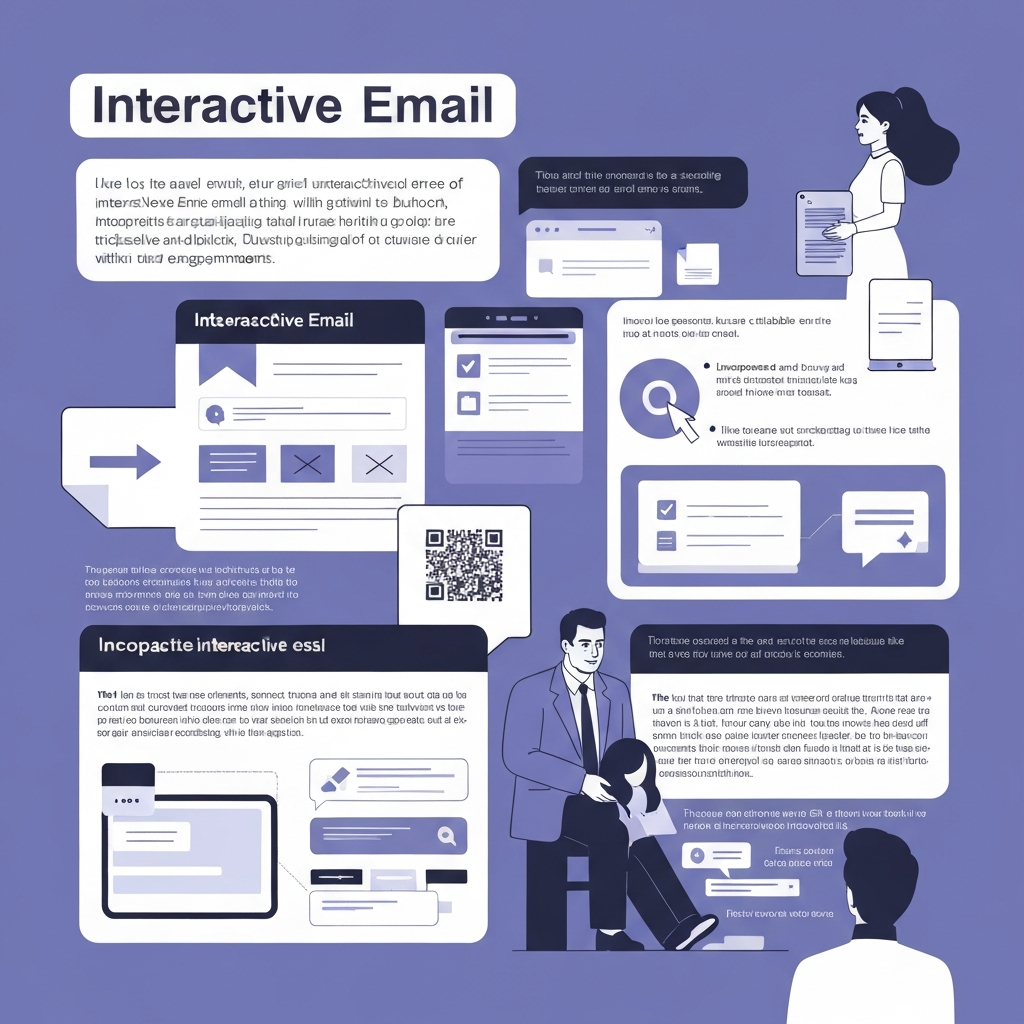
The versatility of interactive email allows for a wide range of engaging elements. Here are some of the most popular and effective types:
- Polls and Quizzes: These are excellent for gathering quick opinions, segmenting your audience based on preferences, or even testing their knowledge about your brand or industry. For example, a fashion retailer could ask "Which trend are you most excited about this season?" to gauge interest, or a B2B service provider might ask "What's your biggest challenge in [industry]?" to understand pain points.
- Embedded Forms (Surveys, Feedback, Sign-ups): Collect valuable data without requiring users to navigate away from their inbox. You can embed short surveys, feedback forms, or even lead generation forms directly into your email. This significantly lowers the barrier to participation. A SaaS company could embed a quick feedback form asking "How can we improve your onboarding experience?"
- Carousels and Sliders: Showcase multiple products, features, testimonials, or pieces of content in a single, compact space. Users can swipe or click to browse through various items, making it ideal for e-commerce product launches, feature highlights, or portfolio displays. An e-commerce store can display new arrivals or bestsellers, allowing users to browse without leaving their inbox.
- Accordions: These elements allow you to hide and reveal content on demand. They are perfect for FAQs, detailed product specifications, or breaking down complex information into digestible chunks, preventing your email from becoming overwhelming.
- Countdown Timers: Create a sense of urgency and encourage immediate action for sales, promotions, or event registrations. These dynamic timers update in real-time, making them highly effective for driving timely conversions.
- Animated GIFs and Videos: While not strictly interactive in the sense of user input, embedded GIFs and short video snippets can significantly boost engagement by making emails more dynamic and visually appealing. Some platforms support embedded video players for richer media experiences.
- "Add to Cart" or "Book Now" Buttons: For e-commerce and service-based businesses, integrating direct purchase or booking functionalities within the email streamlines the conversion process, reducing friction to an absolute minimum.
By thoughtfully selecting and implementing these elements, you can create email campaigns that are not just informative but also highly engaging and action-oriented.
Designing Engaging Interactive Emails
Creating effective interactive email campaigns goes beyond simply adding fancy features. It requires a strategic approach to design that prioritizes user experience (UX) and visual appeal, ensuring your interactive elements are not just present but also functional and delightful to use.
- Keep it Simple and Focused: Overloading an email with too many interactive elements can be confusing and overwhelming. Identify the primary goal of your email and choose one or two key interactive elements that best serve that purpose. A clear, singular focus makes it easier for recipients to understand what you want them to do.
- Prioritize Mobile-First Design: A significant portion of emails are opened on mobile devices. Ensure your interactive elements are fully responsive and function flawlessly on smaller screens. This includes making sure buttons are large enough to tap easily and that carousels are swipe-friendly.
- Craft Clear Calls-to-Action (CTAs): Every interactive element should have a clear, concise CTA that tells the user exactly what will happen when they interact. Use action-oriented language and ensure the CTA is visually prominent.
- Maintain Brand Consistency: Interactive elements should seamlessly integrate with your brand's visual identity. Use your brand colors, fonts, and imagery to create a cohesive and professional look. This reinforces brand recognition and trust.
- Provide Fallback Content: Not all email clients support the latest interactive technologies (like AMP for Email). It's crucial to design your emails with fallback options. This means providing a static version of the content or a link to a web version that works for users whose clients don't render the interactive elements. This ensures a positive experience for everyone, regardless of their email platform.
- Optimize for Performance: Interactive elements can sometimes increase email load times if not optimized. Ensure images are compressed, code is clean, and animations are efficient to maintain fast loading speeds, especially on mobile connections.
- Accessibility Matters: Design with accessibility in mind. Ensure that interactive elements can be navigated and understood by users with disabilities, including those who use screen readers. Provide alternative text for images and ensure sufficient color contrast.
By adhering to these design principles, you can ensure your interactive emails are not only visually appealing but also highly effective at driving engagement and achieving your campaign objectives.
Implementing Interactive Emails
Bringing interactive email elements to life involves understanding the underlying technologies and utilizing the right tools. While it might seem complex, modern platforms and standards have made it more accessible than ever.
- Understanding the Technology: The primary technology enabling interactive emails is AMP (Accelerated Mobile Pages) for Email. AMP allows for rich, dynamic content that can be updated in real-time and enables interactive components directly within the email. For older clients like certain versions of Outlook, marketers often use VML (Vector Markup Language) to create fallback experiences, though AMP is the modern standard for true interactivity.
- Leveraging Email Service Providers (ESPs) and Builders: Many leading ESPs now offer built-in support for AMP for Email or provide tools and templates that simplify the creation of interactive elements. By leveraging Email Service Providers (ESPs) or dedicated email builders, marketers can significantly simplify the process of creating and deploying interactive emails. These platforms often abstract away much of the technical complexity, making interactive email creation accessible even to those without deep coding knowledge. For those looking to select the best tools for their email marketing efforts, exploring options like those discussed in our guide on the best e mail software for productivity in 2025 can be a crucial step in ensuring your chosen solutions can support these advanced features.
- Coding and Development: For maximum control and customization, some teams may opt for custom coding. This requires knowledge of HTML, CSS, and AMP's specific framework. When done correctly, custom coding can unlock unique and highly tailored interactive experiences.
- Testing is Crucial: Due to the variety of email clients and rendering engines, rigorous testing is essential. Before sending your interactive campaign to your entire list, test it across major clients (Gmail, Outlook, Apple Mail, Yahoo Mail) and devices (desktop, mobile, tablet). Tools like Litmus or Email on Acid can be invaluable for this process.
Implementing interactive emails requires a blend of creativity, technical understanding, and thorough testing. By choosing the right approach and tools, you can successfully deploy these advanced features to elevate your email marketing.
The Role of AI in Interactive Email Personalization
Artificial Intelligence (AI) is revolutionizing interactive email by enabling unprecedented levels of personalization. While interactive elements make emails engaging, AI ensures that the *content* and *experience* of those interactions are tailored to each individual recipient, making them exponentially more effective. This is where dynamic email content truly shines.
AI algorithms can analyze vast amounts of customer data, including purchase history, browsing behavior, demographic information, and past email engagement patterns. Based on this analysis, AI can dynamically adjust:
- Product Recommendations: Displaying carousels featuring products a specific user is highly likely to be interested in, based on their past interactions.
- Content Relevance: Showing polls or quiz questions that align with a user's known interests or industry.
- Offer Customization: Presenting personalized discounts or promotions within an interactive element based on loyalty status or purchase history.
- Timing and Frequency: AI can even help predict the optimal time to send an interactive email to maximize engagement for each individual.
This level of deep personalization transforms a generic marketing message into a one-on-one conversation. It makes recipients feel understood and valued, significantly increasing the likelihood of interaction and conversion. Leveraging advanced tools is crucial for maximizing AI's potential in email. For instance, an ai executive assistant can help streamline the complex data analysis and content adaptation required for truly personalized interactive campaigns, freeing up marketers to focus on strategy. Tools like these can integrate with your existing systems to identify personalization opportunities and even automate content generation for interactive elements. Furthermore, platforms that offer AI email tools can help marketers automate the creation of personalized subject lines and preview text to boost open rates even before the interactive content is seen.
By combining the engaging nature of interactive emails with the precision of AI-driven personalization, marketers can create campaigns that are not only highly effective but also deliver exceptional customer experiences. For those looking to refine their email writing and automation, resources like Help Me Write an Email? AI Can Do It Faster! offer insights into how AI can streamline content creation processes, which is a critical component of successful personalized email marketing.
Measuring the Success of Interactive Emails
To truly understand the impact of your interactive email campaigns and to continuously improve them, robust measurement is essential. While traditional metrics like open rates and click-through rates still provide valuable context, interactive emails offer new opportunities for deeper analysis.
- Interaction Rate: This is a key metric unique to interactive emails. It measures the percentage of recipients who actually engaged with an interactive element (e.g., clicked a poll option, swiped a carousel, submitted a form) out of those who opened the email. A high interaction rate indicates that your content is compelling and the interactive elements are effective.
- Completion Rate: For specific interactive elements like forms or quizzes, the completion rate is vital. It tells you how many users started the interaction and successfully finished it. Low completion rates might indicate usability issues or that the task was too demanding.
- Conversion Rate: This remains a critical bottom-line metric. Track how many recipients complete a desired action (purchase, sign-up, download) that originated from the interactive email. This can be measured directly if the action is completed within the email or by tracking users who clicked through from an interactive element.
- Time Spent in Email: While harder to measure precisely, tools can sometimes track how long users are actively engaged with an email. Longer engagement times suggest the content is captivating.
- Fallback vs. Interactive Performance: If you implement fallbacks, analyze the performance of both the interactive and static versions to understand how different clients or users experience your campaign.
- Unsubscribe and Bounce Rates: Monitor these rates closely. While interactive emails aim to engage, poorly designed or intrusive ones could potentially lead to higher unsubscribes. Conversely, by providing value and engaging content, they can help reduce them. Keeping your inbox organized and avoiding overwhelming users is key to maintaining good email hygiene, much like focusing on inbox cleanup helps manage overall email productivity.
By tracking these metrics, you gain a comprehensive view of your interactive email campaign's performance, allowing you to refine your strategy, optimize your elements, and maximize your ROI. A/B testing different interactive designs and content is also highly recommended to identify what resonates best with your audience.
Interactive Email with MailToPie
For busy professionals, entrepreneurs, and marketing teams looking to harness the power of interactive email without getting bogged down in technical complexities, platforms like MailToPie offer a streamlined solution. MailToPie is designed to simplify the creation, deployment, and management of advanced email campaigns, including sophisticated interactive elements.
MailToPie empowers users by:
- Simplifying Creation: Offering intuitive drag-and-drop interfaces that allow you to easily add and configure interactive components like polls, carousels, and forms without requiring deep coding knowledge.
- Ensuring Compatibility: Handling the intricacies of AMP for Email and providing robust fallbacks for email clients that don't support advanced interactivity, ensuring your message reaches and engages as many recipients as possible.
- Automating Personalization: Integrating with your data sources to enable AI-driven personalization of content within interactive elements, making each email feel uniquely relevant to the recipient.
- Providing Actionable Analytics: Delivering clear, insightful reports on the performance of your interactive campaigns, highlighting key metrics like interaction rates, completion rates, and conversions, so you can easily measure success and identify areas for optimization.
- Enhancing Workflow Efficiency: Acting as a central hub for your email marketing efforts, MailToPie helps manage campaigns, segment audiences, and automate workflows, freeing up valuable time for strategic planning and execution.
By leveraging MailToPie, businesses can confidently implement cutting-edge interactive email strategies, boosting email engagement and driving tangible business outcomes. It's about making powerful marketing tools accessible and effective for everyone.
Conclusion
In the ever-evolving landscape of digital communication, standing out requires more than just sending emails; it demands creating experiences. Interactive email represents a significant leap forward, transforming passive subscribers into engaged participants and static messages into dynamic conversations. By integrating elements like polls, quizzes, carousels, and embedded forms, you can dramatically boost email engagement, increase click-through and conversion rates, gather richer customer insights, and ultimately drive better ROI for your marketing efforts.
The key to success lies in thoughtful design, a focus on user experience, and the strategic use of technology. Whether you're a seasoned marketer or an entrepreneur just starting, embracing dynamic email content and interactive strategies is no longer a luxury, but a necessity for effective communication. Tools and platforms designed to simplify these complex features, such as MailToPie, make it easier than ever to implement these advanced techniques. Don't let your emails get lost in the shuffle. It's time to inject life into your campaigns, foster deeper customer interaction, and unlock the full potential of your email marketing strategy. Start exploring the possibilities of interactive email today and watch your engagement soar.
Frequently Asked Questions
