Boost Sales: The Power of Fast Sales Reply Speed

In today's hyper-competitive business landscape, speed isn't just a virtue; it's a critical driver of revenue. Every moment a potential customer waits for a response to their inquiry is a moment they could be exploring a competitor's offering. This is where the concept of sales reply speed transforms from a minor operational detail into a powerful strategic advantage. For entrepreneurs, sales professionals, and busy executives alike, understanding and optimizing how quickly you respond to leads and customers can directly impact your bottom line, customer satisfaction, and overall business growth. This article delves into the significant financial implications of delayed sales responses, explores why promptness is paramount, and offers actionable strategies, including the power of AI, to help you close more deals and foster stronger customer relationships.
The High Cost of Slow: Quantifying the Financial Impact of Delayed Sales Responses
The adage "time is money" holds particularly true in sales. A slow response time isn't just an inconvenience; it's a tangible financial drain on your business. When a prospect reaches out, they are often at their peak interest and readiness to buy. Delaying your reply can lead to a cascade of negative financial consequences:
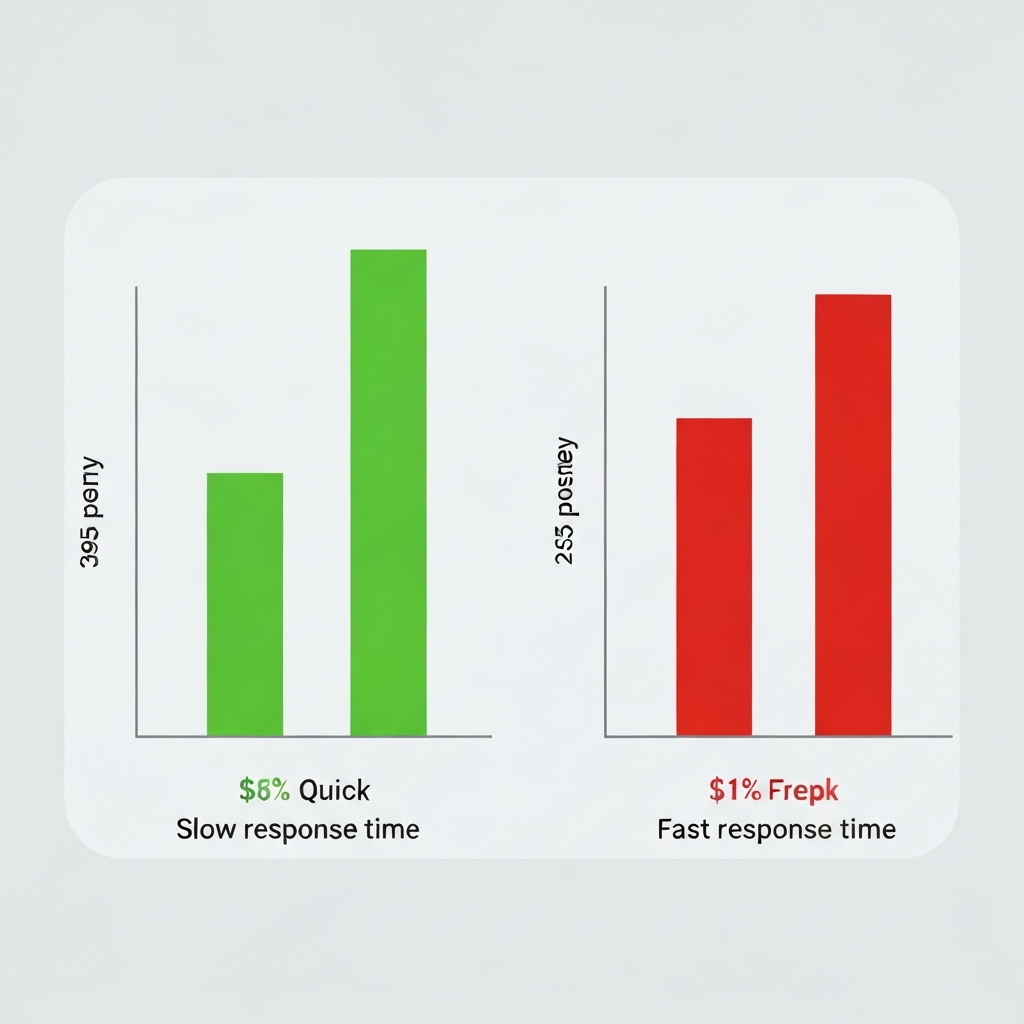
- Lost Leads & Revenue: This is the most direct impact. Prospects who don't hear back quickly are likely to move on to competitors. Research indicates a dramatic drop in conversion rates with even short delays. For instance, responding to a lead within 5 minutes can yield significantly higher conversion rates compared to waiting just 30 minutes. One study suggests that responding within 5 minutes can lead to over 40 conversions, while a 30-minute delay might only result in 10-15, representing a substantial loss of potential customers per month simply due to slow follow-up.
- Wasted Sales Effort: Your sales team invests time and resources in generating leads. If those leads go cold due to slow response times, that initial investment is wasted. The effort spent nurturing a lead that ultimately converts elsewhere represents a significant inefficiency in your sales funnel.
- Damaged Reputation: In the digital age, customer expectations are shaped by instant gratification. A slow response time can signal a lack of attentiveness, disorganization, or even a lack of care. This can lead to negative reviews, poor word-of-mouth, and a tarnished brand image, which are difficult and costly to repair.
- Reduced Customer Lifetime Value: Even if a sale is eventually made, a poor initial experience due to slow communication can set a negative tone. This can impact customer loyalty, reduce the likelihood of repeat business, and decrease the overall customer lifetime value.
The financial ramifications of delayed sales reply speed are substantial. It's not just about the immediate lost sale, but the cumulative effect on your sales pipeline, team efficiency, and long-term brand equity. Improving your email response time is therefore a critical investment in your business's financial health and future growth.
Why Speed Matters: How Reply Speed Directly Affects Lead Conversion and Customer Trust
The urgency with which a business responds to an inquiry is a powerful indicator of its professionalism and commitment. In the realm of sales, speed directly correlates with success in several key areas:
Boosting Lead Conversion Rates: The "speed to lead" phenomenon is well-documented. Prospects are most engaged immediately after their initial contact. The faster you can respond, the higher the probability of converting that interest into a qualified lead or even a sale. According to Voiso, responding to a lead within 5 minutes can increase conversion rates by up to a staggering 100x compared to a 30-minute delay, yet the average business response time can be over 42 hours. This stark contrast highlights a massive opportunity for businesses that prioritize promptness.
Building Customer Trust and Satisfaction: A swift reply demonstrates that you value the prospect's time and interest. It conveys reliability and attentiveness, laying the foundation for a trusting relationship. When customers feel heard and acknowledged quickly, their overall experience is positive, leading to higher satisfaction scores and a greater likelihood of doing business with you. Amplemarket research suggests that prompt replies build trust and enhance the customer experience by showing leads you value their time.
Gaining a Competitive Edge: In crowded markets, being the first to respond can be the decisive factor. If a prospect contacts multiple vendors, the one that responds fastest often captures the lead's attention and sets the tone for the entire sales process. This speed can differentiate you from competitors who are slower to engage, making your business the preferred choice simply by virtue of its responsiveness.
Ultimately, swift sales communication is not just about closing a single deal; it's about establishing a reputation for excellent service and reliability, which fuels ongoing growth and customer loyalty.
The Psychology of Promptness: Understanding Customer Expectations in the Digital Age
We live in an era defined by immediacy. From instant messaging to same-day delivery, consumers have grown accustomed to rapid access and quick resolutions. This psychological shift profoundly impacts their expectations when interacting with businesses, especially during the sales process.
The "On-Demand" Mentality: Today's buyers operate on an "on-demand" basis. They expect information and solutions to be available at their fingertips, whenever they need them. When they submit an inquiry, they are seeking immediate validation that their needs are understood and that a solution is within reach. A delayed response can feel like a barrier, frustrating their immediate need for information or problem-solving.
Perception of Competence and Care: A quick reply signals efficiency and competence. It suggests that the business is well-organized, has its processes in place, and is eager to serve its customers. Conversely, a slow response can be perceived as disinterest, inefficiency, or even a sign of a struggling business. This perception is crucial, as it influences the buyer's confidence in your ability to meet their needs not just now, but in the future.
Setting the Tone for the Relationship: The initial email response time often sets the tone for the entire customer relationship. A prompt, helpful, and professional initial interaction fosters a positive sentiment that can carry through to post-sale support. Conversely, a sluggish start can create an underlying tension or dissatisfaction that may resurface later, impacting customer retention and advocacy.
Understanding this psychological landscape is key. By aligning your sales reply speed with customer expectations for promptness, you can significantly enhance customer engagement and build stronger, more trusting relationships from the very first touchpoint.
Actionable Strategies to Drastically Improve Your Sales Reply Speed
Improving sales reply speed requires a multi-faceted approach that combines efficient processes, clear communication protocols, and the right tools. Here are actionable strategies to help your sales team respond faster:
- Set Clear Response Time SLAs (Service Level Agreements): Define internal goals for how quickly different types of inquiries should be answered. For instance, urgent sales leads might require a response within 1 hour, while general inquiries could have a 24-hour SLA. Communicate these goals clearly to your team and make them a key performance indicator.
- Prioritize and Filter Your Inbox: Not all emails are created equal. Train your team to quickly identify and prioritize urgent messages, hot leads, and critical customer issues. Implement systems (like email labels, folders, or CRM flags) to categorize incoming communications, ensuring high-priority items are addressed first.
- Leverage Templates and Canned Responses: For frequently asked questions or common inquiries, create pre-written template responses. These can be quickly customized with specific details, saving significant typing time. Ensure templates are well-written, professional, and easily adaptable. This is a cornerstone of improving sales productivity.
- Empower Your Team with Information: Ensure your sales representatives have easy access to a knowledge base, FAQs, product information, and pricing details. This allows them to answer questions quickly and accurately without needing to search extensively or ask colleagues, thereby speeding up their sales communication.
- Implement a "Do It Now" Policy for Small Tasks: If an email requires a response that takes less than two minutes (e.g., a quick confirmation, a simple answer), encourage your team to handle it immediately rather than deferring it. This prevents small tasks from piling up and overwhelming the inbox.
- Optimize Your Workflow and Tools: Regularly review your team's email management processes. Are they using an efficient mail client? Are there bottlenecks in how emails are assigned or handled? Tools like email trackers can provide insights into your team's performance and identify areas for improvement. Consider how you can streamline the entire process from receiving an email to sending a reply.
- Train for Efficiency: Conduct regular training sessions focused on efficient email writing, time management, and the effective use of communication tools. Teaching techniques for concise writing and quick decision-making can have a significant impact on email response time.
Implementing these strategies can lead to a dramatic improvement in how quickly your team engages with prospects and customers. For businesses looking to further enhance their speed and efficiency, particularly in follow-up, exploring resources on sales follow up speed can provide additional tactical insights.
Leveraging AI and Automation for Smarter, Faster Email Responses
In the quest for optimal sales reply speed and enhanced business efficiency, artificial intelligence (AI) and automation are no longer futuristic concepts but essential tools. These technologies can transform how sales teams manage their inboxes, ensuring promptness without sacrificing quality or overwhelming human resources.
AI-powered tools can automate many of the repetitive tasks associated with email management. For example, they can:
- Prioritize Urgent Messages: AI can analyze incoming emails, identify keywords, sentiment, and sender history to flag urgent messages that require immediate attention, ensuring hot leads are never missed.
- Automate Routine Replies: For common inquiries, AI can generate draft responses or even send automated acknowledgments, providing instant feedback to the sender while the sales team handles more complex issues.
- Draft Responses: Advanced AI can analyze the content of an incoming email and suggest relevant responses or even draft complete replies based on learned patterns and context. This significantly reduces the time a sales rep spends composing emails.
- Summarize Long Threads: AI can quickly summarize lengthy email conversations, allowing sales reps to get up to speed on a client's history or ongoing discussions in seconds, rather than minutes or hours.
- Schedule Follow-ups: AI can help ensure timely follow-ups by intelligently suggesting or automating the scheduling of next steps based on conversation outcomes.
For businesses looking to truly revolutionize their sales productivity and business efficiency, integrating an ai executive assistant is a game-changer. Tools like MailToPie can automate routine email management, prioritize urgent messages, and even draft responses, freeing up valuable time for your sales team to focus on closing deals. Consider using an ai executive assistant to manage your email communications and ensure no lead falls through the cracks. This allows your team to dedicate more time to high-value activities like strategic planning, relationship building, and closing complex deals, rather than getting bogged down in inbox management. Exploring a comprehensive productivity email system can also offer significant advantages, integrating various AI features to streamline your entire communication workflow. Furthermore, leveraging an AI Virtual Agent can handle initial contact and information gathering, ensuring that by the time a human rep engages, the lead is well-qualified and the interaction is more efficient.
Measuring and Monitoring Your Sales Reply Speed for Continuous Improvement
You can't improve what you don't measure. To truly master sales reply speed, you need a robust system for tracking, analyzing, and acting upon your email response time metrics. This commitment to measurement fosters a culture of continuous improvement and accountability within your sales team.
Key Metrics to Track:
- Average First Response Time: This is the most critical metric, indicating how long it typically takes to send the first reply to a new inquiry.
- Response Time by Lead Source/Priority: Analyze if response times vary significantly based on where the lead came from (e.g., website form, referral, social media) or its assigned priority level.
- Time to Resolution: For customer service inquiries, track how long it takes to fully resolve an issue after the initial contact.
- Internal Reply Time: If collaboration is key, monitor how quickly team members respond to each other's internal emails or requests related to a prospect.
Tools and Methods for Monitoring:
- Email Client Analytics: Many modern email clients offer basic analytics on response times.
- CRM Systems: Most Customer Relationship Management (CRM) platforms have built-in features to track the time from lead creation to first contact and subsequent follow-ups.
- Specialized Email Tracking Tools: Tools like a best email tracker for gmail can provide detailed insights into when emails are opened, clicked, and replied to, offering granular data on engagement and response patterns.
- Regular Reporting and Dashboards: Create regular reports (daily, weekly, monthly) that highlight key sales reply speed metrics. Share these reports with the sales team and management to keep performance top-of-mind.
Use the data gathered to identify trends, pinpoint bottlenecks, and provide targeted coaching to individual sales reps. Managers can use this information to implement training or resources to ensure sales success, motivating reps and reinforcing accountability for continuous improvement. Furthermore, by analyzing communication patterns, you can also unlock business insights from email that can refine your overall sales and marketing strategies.
Case Studies: Businesses Thriving with Rapid Sales Communication
The impact of prioritizing sales reply speed is best illustrated through real-world examples. Businesses that have successfully embedded prompt communication into their sales culture often see significant, measurable improvements:
Case Study 1: SaaS Startup Achieves 40% Higher Conversion
A fast-growing SaaS startup noticed their lead conversion rates were plateauing. Upon analysis, they discovered their average response time to website inquiries was over 12 hours. They implemented a new policy: all inbound leads must receive a first response within 1 hour. They also introduced templated responses for common questions and utilized an AI tool to help draft initial replies. Within three months, they saw a 40% increase in qualified leads converted to demo requests, directly attributed to their improved email response time.
Case Study 2: E-commerce Gains Competitive Edge
An online retailer selling high-value goods faced stiff competition. Customers often had pre-sale questions about product specifications, shipping, or customization. Their initial response time was inconsistent, sometimes taking up to 2 days. By implementing a dedicated customer service chat and email response team trained to respond within 30 minutes, they not only improved customer satisfaction but also saw a 15% reduction in cart abandonment. Prospects felt more confident making purchases when their questions were answered promptly, demonstrating how rapid sales communication can directly boost sales.
These examples underscore that making sales reply speed a priority isn't just good practice; it's a strategic differentiator that leads to tangible business results, from higher conversion rates to increased customer loyalty and competitive advantage.
Conclusion: Making Sales Reply Speed a Competitive Advantage
In the fast-paced digital economy, the speed at which your sales team responds to inquiries is no longer a secondary consideration – it's a fundamental pillar of success. The financial impact of slow replies, from lost leads and wasted effort to damaged reputation, is too significant to ignore. Conversely, prioritizing prompt sales reply speed directly enhances lead conversion rate, fosters invaluable customer trust, and provides a powerful competitive edge.
By implementing strategic approaches, such as setting clear SLAs, prioritizing effectively, and leveraging templated responses, businesses can significantly improve their responsiveness. However, the true revolution in sales productivity and business efficiency often comes through embracing technology. AI-powered tools and solutions, including an ai executive assistant, are instrumental in automating routine tasks, prioritizing urgent messages, and drafting responses, allowing your sales professionals to focus on what they do best: building relationships and closing deals. Continuous monitoring and analysis of your email response time are crucial for sustained improvement, ensuring that speed remains a core competency.
Make sales reply speed a non-negotiable aspect of your sales strategy. Embrace the tools and techniques that empower your team to respond faster, engage more effectively, and ultimately, drive greater revenue. The next time a prospect reaches out, ensure your response is swift, professional, and sets the stage for a successful, long-term customer relationship.
```
Frequently Asked Questions
