Email Reply Speed ROI: Boost Productivity & Profits

Imagine this: a potential client, brimming with enthusiasm, sends an email inquiring about your services. They're ready to buy. But days pass, then a week. By the time a response finally lands in their inbox, their initial excitement has waned, and they've already signed with a competitor who was quicker to respond. This isn't a hypothetical nightmare; it's a common, costly reality for businesses that underestimate the power of swift email communication.
In today's fast-paced digital world, speed isn't just a preference; it's a performance indicator. While we often focus on the content of our emails, the speed at which we reply carries an often-unseen but significant financial weight. This is where the concept of email reply speed ROI comes into play. Understanding and optimizing your email response time can unlock substantial gains in productivity, customer satisfaction, and ultimately, profitability. This article will delve into why prioritizing prompt email replies is no longer a 'nice-to-have' but a critical business strategy, exploring its tangible return on investment and how you can achieve it.
Understanding the Email Reply Speed ROI Equation
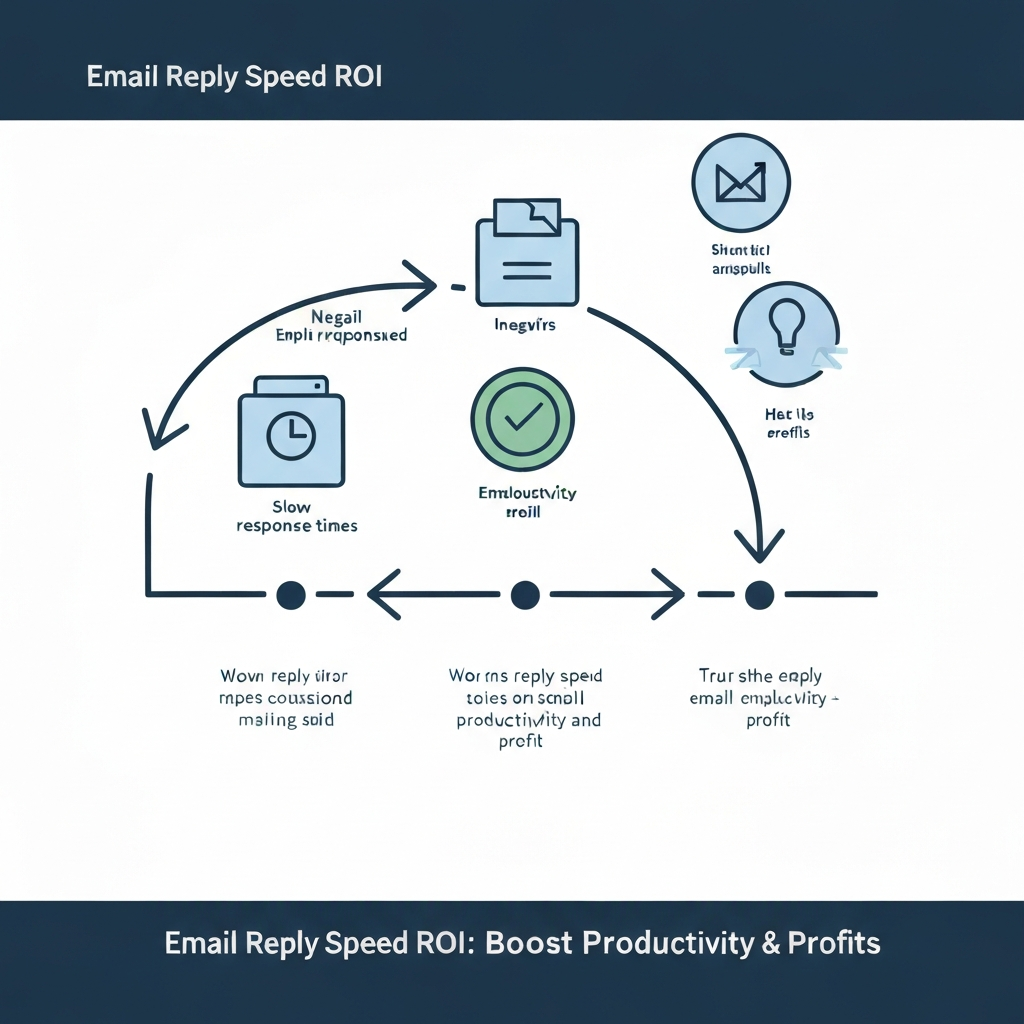
Return on Investment (ROI) is a fundamental metric for assessing the profitability of any business initiative. When applied to email reply speed, it transforms a seemingly soft skill into a quantifiable driver of success. The email reply speed ROI equation isn't just about saving a few minutes here and there; it's about the cascading positive effects that timely communication has on your bottom line.
At its core, the ROI equation looks like this:
ROI = (Gain from Improved Response Time - Cost of Improving Response Time) / Cost of Improving Response Time * 100
Let's dissect the components:
- Gain from Improved Response Time: This is where the magic happens. Faster replies lead to:
- Increased Lead Conversion Rates: Capturing more potential customers while they are most engaged.
- Higher Customer Retention: Satisfied customers are loyal customers.
- Enhanced Brand Reputation: Being known as a responsive, reliable business.
- Boosted Employee Productivity: Less time spent managing an overwhelming inbox means more time for core tasks.
- Reduced Operational Friction: Smoother communication internally and externally.
- Cost of Improving Response Time: This includes investments in:
- Training: Educating staff on best practices for email management.
- Technology: Implementing efficient e mail software, CRM systems, or AI tools.
- Process Optimization: Developing clear internal policies and workflows.
The key insight is that the 'Gain' often far outweighs the 'Cost.' For instance, a single lost lead due to slow response might represent thousands of dollars in lost revenue, dwarfing the investment in a better email system or training.
Mastering your email workflow is a crucial first step. Learn more about how to Mastering Email Response Time: Boost Productivity to lay the groundwork for these gains.
Impact of Response Time on Customer Satisfaction and Loyalty
In the realm of customer service, speed is often synonymous with care. When a customer reaches out with a question, a concern, or a compliment, their expectation is not just for a resolution, but for timely acknowledgment. A prolonged silence after a customer initiates contact can be profoundly alienating.
Studies consistently show that customers expect quick responses. According to research, a significant majority of customers expect a reply within 24 business hours, and often much faster for urgent inquiries. When 'immediate' isn't feasible, expectations still lean heavily towards promptness. Failing to meet these expectations can have dire consequences.
A slow customer service speed signals a lack of priority for the customer's needs, leading to frustration, a damaged perception of your brand, and a higher likelihood of churn. Conversely, swift and efficient responses build trust, foster loyalty, and turn customers into advocates.
The negative impacts of slow replies are clear:
- Decreased Customer Satisfaction: Frustrated customers are unhappy customers.
- Increased Churn Rate: Customers will seek out competitors who value their time.
- Negative Word-of-Mouth: Unhappy customers are more likely to share their bad experiences.
- Lost Opportunities for Upselling/Cross-selling: A customer who feels ignored is unlikely to be receptive to further offers.
The benefits of a rapid email response time include:
- Elevated Customer Satisfaction: Making customers feel heard and valued.
- Enhanced Brand Loyalty: Building stronger, long-term relationships.
- Positive Reviews and Referrals: Turning happy customers into promoters.
- Opportunities for Deeper Engagement: Facilitating smoother customer journeys.
Understanding how to set and meet these expectations is vital. As highlighted in articles like Why Your Business Needs a Standard Email Response Time Policy, establishing clear guidelines can significantly improve customer perception and internal efficiency.
How Faster Replies Drive Sales and Lead Conversion
In the high-stakes arena of sales, sales response time is often the make-or-break factor for converting leads into paying customers. When a prospect expresses interest, their buying intent is at its peak. A delayed response can lead to an opportunity lost that is difficult, if not impossible, to recover.
Research consistently shows a direct correlation between response speed and conversion rates. For example, studies have found that contacting a lead within 5 minutes of their inquiry can increase conversion rates by an astonishing 400%. Waiting even an hour can drastically reduce your chances. This highlights how crucial rapid email response time is in the sales cycle.
Consider this scenario:
- Scenario A (Slow Response): A potential client fills out a contact form on your website at 10 AM on Monday. They receive an automated acknowledgment but no personal reply until Wednesday afternoon. By then, they've already felt ignored, researched alternatives, and perhaps even made a purchase elsewhere. Your email response time of 48+ hours has effectively killed the lead.
- Scenario B (Fast Response): The same client sends the inquiry at 10 AM on Monday. By 10:15 AM, they receive a personalized, informative email addressing their query and offering a next step. They feel valued, confident in your responsiveness, and are much more likely to proceed with a purchase. Your sales response time of 15 minutes has secured a customer.
This isn't just about closing deals faster; it's about capturing the lion's share of the market that values prompt engagement. A faster email response time can mean the difference between a prospect choosing you or your competitor.
For dedicated strategies on this front, explore our guide on Boost Sales: The Power of Fast Sales Reply Speed.
Strategies to Improve Email Reply Speed
Improving your email reply speed isn't about magic; it's about implementing smart, consistent strategies. By refining your approach to email management, you can significantly reduce response times without sacrificing quality. Here are several actionable strategies:
1. Set Clear Internal Expectations and Policies:
- Define what constitutes a 'prompt' reply for different types of emails (e.g., urgent inquiries within 2 hours, general questions within 24 business hours).
- Communicate these policies clearly to your entire team.
- Consider implementing auto-responders that inform senders when they can expect a personal reply, managing their expectations from the outset.
2. Prioritize Ruthlessly:
- Not all emails are created equal. Develop a system for quickly identifying and addressing urgent messages that require immediate attention.
- Use flags, labels, or dedicated folders to categorize emails by priority.
3. Leverage Templates and Canned Responses:
- For frequently asked questions or common inquiries, pre-written templates can save enormous amounts of time.
- Ensure these templates are customizable so they still feel personal when sent. This is a fundamental aspect of email productivity tips.
4. Implement Effective Inbox Management Techniques:
- Inbox Zero Strategy: While not always achievable daily, striving for an organized inbox where nothing is left unaddressed is a powerful goal. This involves processing emails rather than just reading them, deciding to reply, delegate, defer, or delete. Learn more about the inbox zero strategy for deeper insights into managing email volume efficiently.
- Batching Emails: Instead of checking email constantly, dedicate specific times throughout the day to process your inbox. This minimizes context switching and improves focus.
- Scheduled Sending: If you draft a reply outside of business hours, schedule it to send during working hours to manage expectations.
5. Delegate and Foster Team Collaboration:
- If an email is better handled by a colleague or another department, forward it promptly with clear instructions.
- Utilize shared inboxes or team email management tools to ensure accountability and prevent emails from falling through the cracks.
6. Optimize Your Tools and Workflow:
- The right e mail software and mail client can make a world of difference. Ensure your tools are efficient, user-friendly, and integrated with other business systems.
- Consider how your overall business communication efficiency can be improved by streamlining the tools you use daily.
Investing in the right tools is paramount. Explore options in our guide to the Best E Mail Software for Productivity in 2025 or compare different Best Mail Client Options for Business Professionals to find what best suits your needs.
Leveraging AI for Enhanced Email Responsiveness
In the quest for superior email reply speed, Artificial Intelligence (AI) has emerged as a transformative force. AI-powered solutions are no longer futuristic concepts; they are practical tools that can dramatically enhance business communication efficiency and boost your email reply speed ROI.
AI can assist in numerous ways to speed up your email workflow:
- Automated Triage and Prioritization: AI can analyze incoming emails for urgency, sender importance, and keywords to automatically sort and prioritize your inbox, ensuring critical messages are surfaced quickly.
- Smart Reply Suggestions and Draft Generation: Many AI tools can analyze the content of an email and suggest relevant, pre-written replies or even draft entire responses based on context. This significantly reduces the time spent composing emails, especially for routine inquiries. This capability can be a lifesaver when you need to Help Me Write an Email? AI Can Do It Faster!.
- Sentiment Analysis: AI can gauge the emotional tone of an email, helping you identify frustrated customers or urgent situations that require immediate attention.
- Automated Follow-ups: For sales and customer service, AI can be programmed to send automated follow-up emails if a response isn't received within a certain timeframe, ensuring no lead or customer query goes cold.
- Summarization of Long Threads: AI can quickly summarize lengthy email conversations, allowing you to grasp the key points and context without reading through dozens of messages.
For businesses looking to truly revolutionize their email handling, advanced AI solutions are key. Tools like an ai executive assistant can help streamline your workflow by automating repetitive tasks, drafting responses, and ensuring critical messages are never missed. Consider using an ai executive assistant to manage your email communications, freeing up valuable human time for more strategic interactions. Modern ai executive assistant platforms offer advanced email management features, making them an indispensable asset for boosting productivity and achieving superior email reply speed ROI.
Implementing such technologies is a cornerstone of modern productivity. Discover more about how these systems work in our article on Boost Productivity with an AI Email System.
Measuring and Monitoring Your Email Reply Speed Performance
You can't improve what you don't measure. To truly understand and maximize your email reply speed ROI, you need a robust system for tracking your performance. Setting clear metrics and regularly monitoring them is crucial for identifying bottlenecks and areas for improvement.
Key metrics to track include:
- Average Response Time: The average time it takes for your team to send the first reply to any incoming email. This can be broken down by department, agent, or email type.
- First Response Time: Specifically measures the time taken for the initial reply.
- Resolution Time: The total time taken to fully resolve a customer's issue or query via email.
- Percentage of Emails Responded to Within SLA (Service Level Agreement): This measures how often you meet your defined response time targets. For example, '95% of all inquiries responded to within 24 business hours.'
Tools for measurement include built-in analytics within most modern e mail software and dedicated email tracking platforms. Regularly reviewing these reports allows you to:
- Identify individual or team performance trends.
- Spot patterns in email volume or complexity.
- Assess the effectiveness of implemented strategies.
- Adjust your goals and processes accordingly.
Understanding how to measure and calculate ROI is foundational. Resources like What to Expect: Measuring Response & Calculating ROI can provide further insight into the methodologies for tracking and valuing your communication efforts.
Conclusion: Making Email Speed a Competitive Advantage
In the intricate ecosystem of modern business, the humble email remains a primary communication channel. However, its effectiveness hinges not just on its content but on its velocity. The email reply speed ROI is a powerful, often overlooked, metric that directly impacts your company's productivity, customer loyalty, and profitability.
We've explored how slow response times can lead to lost sales, frustrated customers, and damaged brand reputation. Conversely, a commitment to fast and efficient email response time fosters trust, drives conversion, and cultivates lasting customer relationships. By implementing strategic improvements, from setting clear expectations and leveraging templates to embracing AI-powered solutions like an ai executive assistant, businesses can transform their email management from a chore into a competitive advantage.
Don't let slow replies be the silent killer of opportunities. Start measuring your performance today, identify areas for improvement, and invest in the tools and processes that will accelerate your communication. Prioritizing email response time is a strategic imperative that yields tangible returns, ensuring your business remains agile, responsive, and profitable in today's dynamic marketplace.
Establishing a professional communication foundation, starting with a clear Business Email Address: Boost Productivity with AI, is a critical first step in this journey.
```
Frequently Asked Questions
