Top AI for Business: Boost Your Email Productivity

In today's fast-paced business environment, the inbox has become the central nervous system of operations. Yet, for many professionals, it's also a source of overwhelming stress and lost productivity. The sheer volume of emails, the constant demand for quick responses, and the administrative burden of managing communication can easily consume hours that could be better spent on strategic initiatives. Fortunately, a powerful ally has emerged: Artificial Intelligence. The best AI for business is no longer a futuristic concept; it's a present-day reality offering tangible solutions to enhance business productivity tools and streamline workflows. This article delves into how AI is revolutionizing email management, empowering professionals across industries, and providing a critical competitive edge. We'll explore the transformative capabilities of AI in handling your daily deluge of digital messages, ensuring you can focus on what truly matters.
Introduction: The Evolving Role of AI in Business Email
Email has been the backbone of business communication for decades, but its effectiveness is increasingly challenged by its own success. The convenience that made it ubiquitous has also led to an unprecedented volume of messages, notifications, and requests. This constant influx can lead to missed opportunities, delayed responses, and significant time drain. Enter Artificial Intelligence (AI). Once confined to science fiction or highly specialized applications, AI is now democratizing advanced capabilities, making them accessible to businesses of all sizes. Specifically, AI is transforming how we interact with our inboxes, moving beyond simple filters and rules to intelligent, adaptive systems. The evolution of AI in business email isn't just about doing things faster; it's about doing them smarter, more efficiently, and with greater strategic impact. From automating routine tasks to providing nuanced insights, AI is reshaping the landscape of professional communication.
Why AI is Crucial for Modern Email Management
The modern business landscape is characterized by speed, connectivity, and an ever-increasing flow of information. In this environment, effective communication isn't just a nice-to-have; it's a critical determinant of success. AI is stepping in to address the inherent challenges of managing this communication efficiently.
The Deluge of Digital Communication
Consider the statistics: A typical knowledge worker receives an average of 120 emails per day. Of these, a significant portion requires careful reading, prioritization, and response. This constant stream can feel like an unending tide, making it difficult to discern urgent matters from less critical ones. Without effective tools, professionals risk drowning in their inboxes, leading to burnout and decreased output. Tools for inbox cleanup are essential, but AI takes this a step further by proactively managing the flow rather than just reacting to it.
The Cost of Inefficiency
Time is money, especially in business. Studies suggest that professionals spend a considerable portion of their workday managing emails – anywhere from 20% to as much as 50% in some roles. This time spent on sorting, reading, drafting, and responding to routine emails represents a massive opportunity cost. It's time that could be dedicated to client interaction, strategic planning, product development, or sales calls. The cumulative effect of this inefficiency across an organization can significantly impact profitability and growth.
The Promise of AI
AI offers a powerful antidote to email overload. By leveraging machine learning and natural language processing (NLP), AI can understand, categorize, and even act upon emails with remarkable accuracy and speed. This capability is vital for maintaining a competitive edge. As highlighted by TechRepublic, AI tools are becoming indispensable for IT leaders looking to boost overall business productivity, with solutions like Google Workspace integrating AI deeply into everyday applications. AI-powered email management transforms the inbox from a bottleneck into a streamlined communication hub. It promises to reduce administrative burdens, improve response times, and ensure that critical information is always at the forefront, making it a cornerstone of modern business productivity tools.
Top AI Features for Boosting Email Productivity
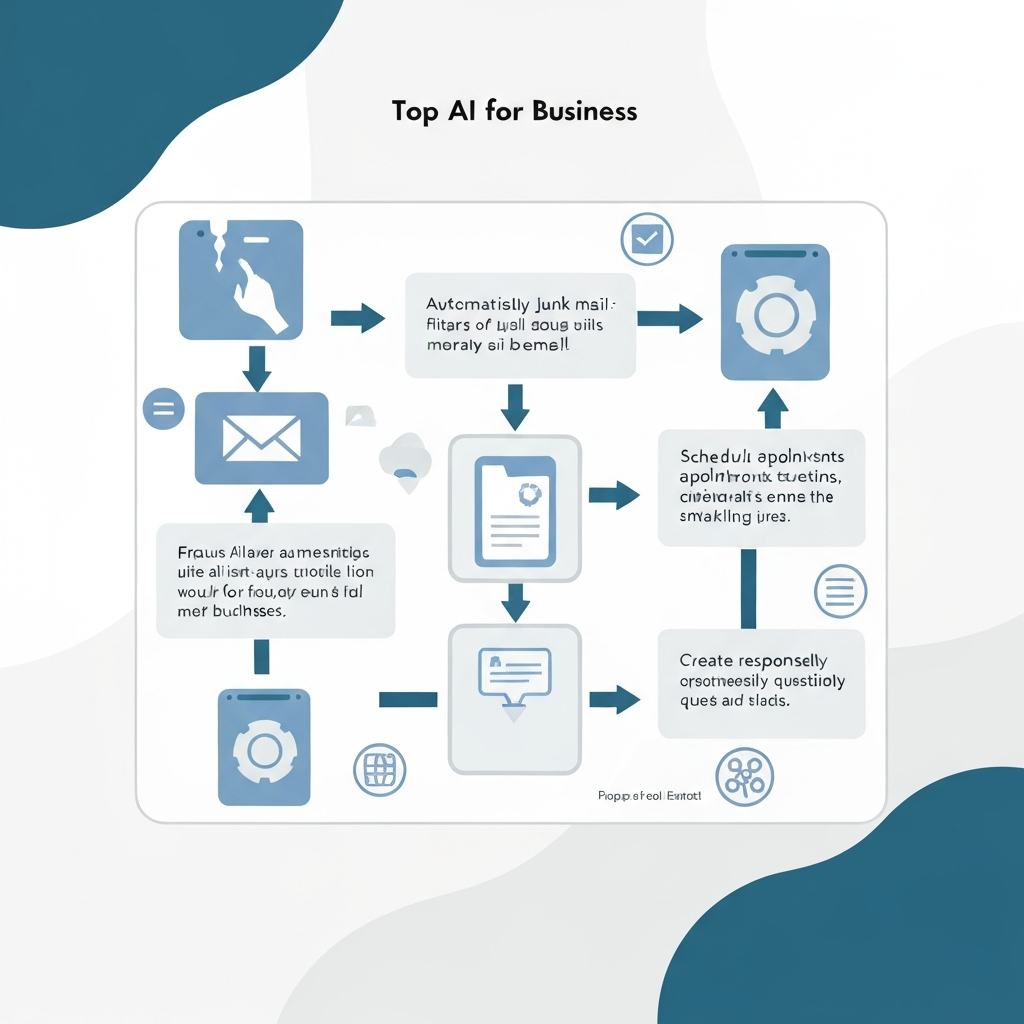
The power of AI in email management lies in its ability to automate complex tasks, provide intelligent assistance, and learn from user behavior. Here are some of the most impactful AI features transforming business inboxes:
Intelligent Sorting and Prioritization
AI algorithms can analyze the content, sender, and context of emails to automatically categorize them. This goes beyond simple folder rules. AI can identify urgent requests, high-priority client communications, or important internal updates, flagging them for immediate attention. This "smart inbox" functionality ensures that critical messages are never missed amidst the noise, allowing users to focus their attention where it's most needed.
AI-Powered Drafting and Response Generation
One of the most time-consuming aspects of email is crafting replies. AI can significantly accelerate this process. Tools can suggest pre-written responses based on the email's content, draft entirely new emails from simple prompts, or even help you write an email that matches a specific tone or style. This feature is invaluable for maintaining consistent and timely communication, especially for high-volume correspondence. Some advanced AI can even learn your personal writing style, ensuring drafted messages sound authentically "you."
Automated Summarization and Insights
Long email threads can be daunting. AI can quickly read through lengthy conversations and generate concise summaries, highlighting key decisions, action items, and important information. This saves considerable time spent deciphering complex discussions. Furthermore, AI can extract actionable insights, such as identifying recurring customer issues, tracking project progress mentioned in emails, or recognizing sentiment in client communications, providing valuable data for business improvement.
Smart Scheduling and Follow-ups
AI can intelligently suggest optimal times to send emails for maximum engagement, or automatically schedule follow-up reminders for emails that haven't received a response. This proactive approach helps maintain momentum on projects and sales pipelines, ensuring that no task or opportunity falls through the cracks. This feature is a core component of effective email automation.
Spam and Phishing Detection
Security is paramount. AI-powered spam filters are far more sophisticated than traditional rule-based systems. They can detect and block advanced phishing attempts and malicious emails with greater accuracy, protecting sensitive business data and reducing the risk of security breaches. This is a critical aspect of AI email management for any enterprise IT department.
How AI Empowers Different Business Roles (Executives, Sales, Entrepreneurs)
The impact of AI on email productivity is not uniform; it adapts to the unique challenges and demands of different professional roles, offering tailored solutions.
For the Busy Executive
Executives are often overwhelmed by a constant stream of emails from direct reports, stakeholders, clients, and external contacts. Their time is exceptionally valuable and best spent on strategic decision-making, leadership, and high-level communication. For executives drowning in daily communications, an ai executive assistant can be a game-changer. These tools go beyond simple filtering, offering sophisticated capabilities to identify critical messages, summarize lengthy threads, and even draft initial responses based on learned communication styles. This frees up valuable executive time for strategic decision-making and leadership, ensuring they are focused on high-impact activities rather than inbox management. Tools like these are essential for maintaining executive efficiency.
For the Driven Sales Professional
In sales, timely and personalized communication is key to building relationships and closing deals. AI can assist sales teams in numerous ways. It can help prioritize leads based on engagement levels, draft personalized outreach emails and follow-ups, and even analyze customer communications to identify buying signals or potential objections. For instance, AI can suggest the best time to send a follow-up email or draft a response to a common inquiry, significantly improving AI in sales effectiveness. This allows sales professionals to spend more time on actual selling and less time on administrative tasks. Tools that help manage high volumes of prospect communication are crucial here.
For the Agile Entrepreneur
Entrepreneurs, especially those in small businesses or startups, wear many hats. They are often responsible for sales, marketing, operations, and customer service, all while managing a lean team. For entrepreneurs, AI email tools can automate repetitive tasks, draft marketing emails, manage customer inquiries, and help organize communications. According to KC SourceLink, AI productivity tools are vital for entrepreneurs and small business owners to manage time, streamline communication, and automate marketing efforts. By offloading some of the communication workload, AI empowers entrepreneurs to focus on growth strategies, innovation, and scaling their business, making them more agile and effective.
Choosing the Right AI Email Tool for Your Business Needs
With a growing number of AI-powered solutions available, selecting the right tool can seem daunting. A strategic approach ensures you invest in a solution that genuinely enhances your team's productivity.
Assessing Your Specific Pain Points
Before exploring tools, clearly define the primary email-related challenges your business faces. Is it the sheer volume of emails? Difficulty prioritizing? Time spent drafting responses? Inconsistent follow-ups? Understanding these pain points will guide your search. For example, if drafting responses is the biggest bottleneck, you'll prioritize tools with strong AI writing capabilities, similar to those discussed in articles about how to help me write an email faster.
Key Features to Look For
Based on your pain points, identify essential features. These might include:
- Intelligent Prioritization: Automatically flags or sorts important emails.
- Automated Response Suggestions/Drafting: AI-generated reply options or full drafts.
- Email Summarization: Condenses long threads into key takeaways.
- Scheduling and Follow-up Automation: Manages outgoing emails and reminders.
- Natural Language Processing (NLP): For understanding intent and sentiment.
- Integration Capabilities: Works with your existing email client (Gmail, Outlook, etc.) and CRM.
Consider tools that offer comprehensive smart inbox solutions, moving beyond basic filtering.
Integration and Scalability
The best AI tools seamlessly integrate with your existing email platforms (like Outlook or Gmail) and other business software, such as CRM systems. This ensures a smooth workflow and avoids creating data silos. Furthermore, consider the scalability of the solution. Can it grow with your business? Does it offer different tiers or features for teams of varying sizes? This is crucial when looking at the best ai for business solutions.
Security and Compliance
For businesses, especially those handling sensitive data, security and compliance are non-negotiable. Ensure the AI tool adheres to industry-standard security protocols and data privacy regulations (like GDPR or CCPA). Understand how the AI processes your data and where it's stored. Enterprise IT leaders often prioritize solutions that offer robust security features and clear compliance policies, as noted in discussions about top AI tools for business IT.
Implementing AI for Seamless Email Workflow Integration
Adopting new technology can be challenging, but with a thoughtful approach, integrating AI into your email workflow can be remarkably smooth and highly rewarding.
Start Small, Scale Smartly
Don't try to overhaul your entire email strategy overnight. Begin by implementing AI features for a specific, high-impact use case or with a pilot team. For instance, you might start by using AI for summarizing long meeting threads or drafting routine customer service responses. Once the benefits are proven and the team is comfortable, gradually expand the AI's role to other areas. This phased approach minimizes disruption and allows for iterative learning.
Training and Customization
Most AI tools benefit from a period of training and customization. This might involve the AI learning your preferred communication style, identifying key contacts, or understanding specific business jargon. Encourage your team to provide feedback and actively use the AI's suggestions. The more the AI interacts with your specific workflow and data, the more accurate and helpful it becomes. This is particularly true for tools aiming to provide a personalized business email address experience enhanced by AI.
Measuring Success
Define clear metrics for success before implementation. These could include reduced time spent on email per employee, improved email response time roi, faster resolution of customer inquiries, or increased output on core business tasks. Regularly track these metrics to quantify the ROI of your AI investment and identify areas for further optimization. As you master your email response time, you'll see direct improvements in productivity and customer satisfaction.
The Future of AI in Business Communication and Productivity
The current wave of AI in email management is just the beginning. As AI technology continues to advance, its role in business communication will become even more sophisticated and integrated.
Hyper-Personalization
Future AI will likely offer even deeper levels of personalization in email communication. This could involve AI automatically tailoring messages not just to a recipient's role or industry, but to their specific communication preferences, past interactions, and even emotional state, fostering stronger relationships and more effective engagement. This could extend to creating truly interactive email experiences powered by AI.
Proactive Communication Management
Instead of just responding to incoming emails, AI will increasingly act proactively. Imagine AI anticipating your communication needs – for example, automatically drafting a follow-up email after a meeting, preparing a summary of recent client interactions before a call, or even initiating communication to prevent potential issues before they arise. This shift from reactive to proactive management will redefine efficiency.
AI as a Collaborative Partner
AI is evolving from a tool into a genuine collaborative partner. In the future, AI assistants will be able to participate more dynamically in team communication, understand complex project dynamics, and offer strategic advice based on the collective information they process. This collaborative approach promises to unlock new levels of organizational intelligence and innovation, making tools like the best ai for business indispensable.
Conclusion: Harnessing AI for Peak Email Efficiency
The inbox, once a potential productivity killer, is rapidly transforming into a powerful engine for business growth, thanks to the advent of AI. By embracing the best AI for business, professionals can reclaim countless hours, reduce stress, and focus on high-value activities. From intelligent sorting and drafting to proactive communication and enhanced security, AI offers a comprehensive suite of solutions for modern challenges. Whether you're an executive seeking to streamline your strategic communication, a sales professional aiming to close more deals, or an entrepreneur building your dream, AI-powered tools are designed to empower you. Implementing these solutions requires a strategic approach, focusing on specific needs and gradual integration. As AI continues its rapid evolution, staying ahead means understanding its potential and leveraging it to gain a competitive advantage. Start exploring the possibilities today and transform your email from a chore into a catalyst for success.

Frequently Asked Questions
