Unlock Business Insights from Email with AI

In today's fast-paced business world, your inbox is more than just a communication channel; it's a bustling hub of conversations, decisions, and crucial data. For many professionals, the sheer volume of emails can feel overwhelming, a never-ending stream that distracts rather than informs. But what if you could transform this digital deluge into a powerful engine for strategic decision-making? What if your inbox held the secrets to understanding your customers better, spotting emerging market trends, and optimizing your internal operations? The good news is, it does. By leveraging the power of Artificial Intelligence (AI), you can unlock invaluable business insights from email, turning your inbox from a productivity drain into a strategic asset.
Why Your Inbox is a Goldmine for Business Intelligence
Think about the sheer amount of communication that flows through email daily. Sales teams discuss leads and close deals. Customer support addresses issues and gathers feedback. Marketing teams coordinate campaigns and analyze responses. Project managers track progress and resolve roadblocks. Executives discuss strategy and market shifts. Each email is a tiny piece of information, a data point contributing to a larger narrative about your business, your customers, and your market. When aggregated and analyzed, these individual messages form a rich tapestry of business intelligence email could never provide through traditional, siloed reports.
This constant, often unstructured, dialogue is a direct line to:
- Customer Sentiment: What are customers saying about your products or services? Are they happy, frustrated, or confused? Understanding their emotional state and specific pain points is critical for retention and improvement. This is where invaluable customer insights email exchanges can provide unfiltered feedback.
- Emerging Trends: Are certain topics or questions appearing more frequently? This could signal an upcoming market shift, a new customer need, or a recurring issue that needs a systemic solution.
- Sales Opportunities: Unanswered questions, expressed interest, or even casual mentions of needs can highlight potential sales leads or upsell opportunities. Analyzing communication patterns can significantly improve your sales follow up speed.
- Operational Efficiencies (or Inefficiencies): Do recurring questions indicate a need for better documentation? Are there bottlenecks in communication workflows? Email reveals how teams collaborate and where processes can be smoothed out.
- Competitive Intelligence: Mentions of competitors, discussions about industry news, or customer comparisons can offer insights into the competitive landscape.
Ignoring this wealth of information means leaving critical data on the table, impacting your ability to make informed decisions and stay ahead of the curve. As highlighted by Trimbox.io, "AI-driven email insights enable businesses to analyze large volumes of email data quickly and accurately. Instead of manually sifting through data, AI algorithms can process..." – a process that was once manual and time-consuming is now becoming automated and accessible.
Identifying Key Information within Email Communications
The challenge, of course, is that email is inherently unstructured. It’s a mix of conversational language, attachments, signatures, and varying formatting. Manually sifting through thousands of emails to find specific insights is impractical, if not impossible. This is where the ability to identify key information systematically becomes paramount.
Key information can manifest in several forms:
- Keywords and Phrases: Specific terms related to your products, services, industry, competitors, or common customer issues.
- Named Entities: Identifying people, organizations, locations, dates, and product names within the text.
- Sentiment: Determining the emotional tone of the message – positive, negative, or neutral.
- Intent: Understanding the purpose behind the email, such as a request for information, a complaint, a sales inquiry, or a confirmation.
- Topics and Themes: Grouping emails based on recurring subjects, allowing you to see what's most prevalent.
- Action Items: Identifying tasks or follow-ups that need to be addressed. This is crucial for converting communication into action, a concept explored in our article on how to turn emails into actionable tasks.
Without a structured approach, these signals remain buried. The goal of email data analysis is to bring these hidden patterns to the surface, making them understandable and actionable.
Leveraging AI Tools for Automated Email Data Extraction
This is where Artificial Intelligence truly shines. AI-powered tools are revolutionizing how we interact with our email, moving beyond simple organization and search to sophisticated data extraction from email. These tools employ Natural Language Processing (NLP) and Machine Learning (ML) to understand the context, sentiment, and key entities within email content, even when it’s written in informal, conversational language.
How AI automates this process:
- Natural Language Processing (NLP): AI uses NLP to break down human language, understand grammar, context, and meaning. This allows it to interpret the nuances of email communication.
- Sentiment Analysis: Algorithms can be trained to detect positive, negative, or neutral sentiment in text, providing a measure of customer satisfaction or reaction.
- Entity Recognition: AI can identify and categorize key information like names, companies, products, dates, and locations, turning unstructured text into structured data.
- Topic Modeling: ML algorithms can group similar emails based on their content, revealing recurring themes and topics without manual tagging.
- Summarization: AI can condense long email threads or individual messages into concise summaries, highlighting the most important points and decisions.
For professionals managing high volumes of communication, an ai executive assistant can be a game-changer, helping to prioritize, summarize, and even extract key information. Tools like ai executive assistant are designed to augment your capabilities, making complex AI email management tasks more accessible. These advanced platforms can filter out noise, flag urgent matters, and present actionable summaries, significantly boosting inbox productivity. As Nylas explains, "By converting email data into structured, actionable insights, businesses can streamline their operations, drive personalized customer interactions, and make more informed, data-driven decisions."
This automation is critical. It democratizes data analysis, allowing individuals and teams without a deep data science background to benefit from the insights hidden within their emails. Tools like Outlook AI Assistant or advanced Gmail automation features are increasingly incorporating these AI capabilities.
Analyzing Email Data for Customer Sentiment and Trends
Once AI has extracted and structured the raw data from your emails, the real magic of analysis begins. This is where you move from simply having data to gaining actionable intelligence. By applying analytical techniques, you can uncover patterns related to customer sentiment, market trends, and operational performance.
Understanding Customer Sentiment
Sentiment analysis applied to customer emails can provide a real-time pulse on customer satisfaction. Imagine automatically categorizing customer emails:
- Positive Sentiment: Emails praising product features, expressing satisfaction with service, or offering testimonials. These can inform marketing campaigns and highlight what’s working well.
- Negative Sentiment: Emails detailing complaints, reporting bugs, expressing frustration, or threatening to churn. These are critical alerts for customer success teams, product development, and support. Addressing these proactively can prevent churn and improve loyalty.
- Neutral Sentiment: Informational emails, confirmations, or general inquiries that don't carry strong emotional weight but can still reveal common questions or information needs.
By quantifying sentiment over time, you can track how changes in your product, service, or policies impact customer perception. This is far more nuanced than occasional surveys and provides an ongoing stream of customer insights email communications can offer.
Identifying Market and Product Trends
Topic modeling and keyword extraction can reveal significant trends:
- Feature Requests: Are multiple customers asking for the same new feature or improvement? This provides direct input for your product roadmap.
- Pain Points: Recurring issues or challenges mentioned by customers highlight areas where your product or service might be falling short or where new solutions are needed.
- Competitive Mentions: Increased discussion about competitors could signal a shift in the market or a need to re-evaluate your competitive positioning.
- Industry Buzzwords: Tracking the adoption and discussion of new industry terms or concepts can indicate where your business should focus its attention.
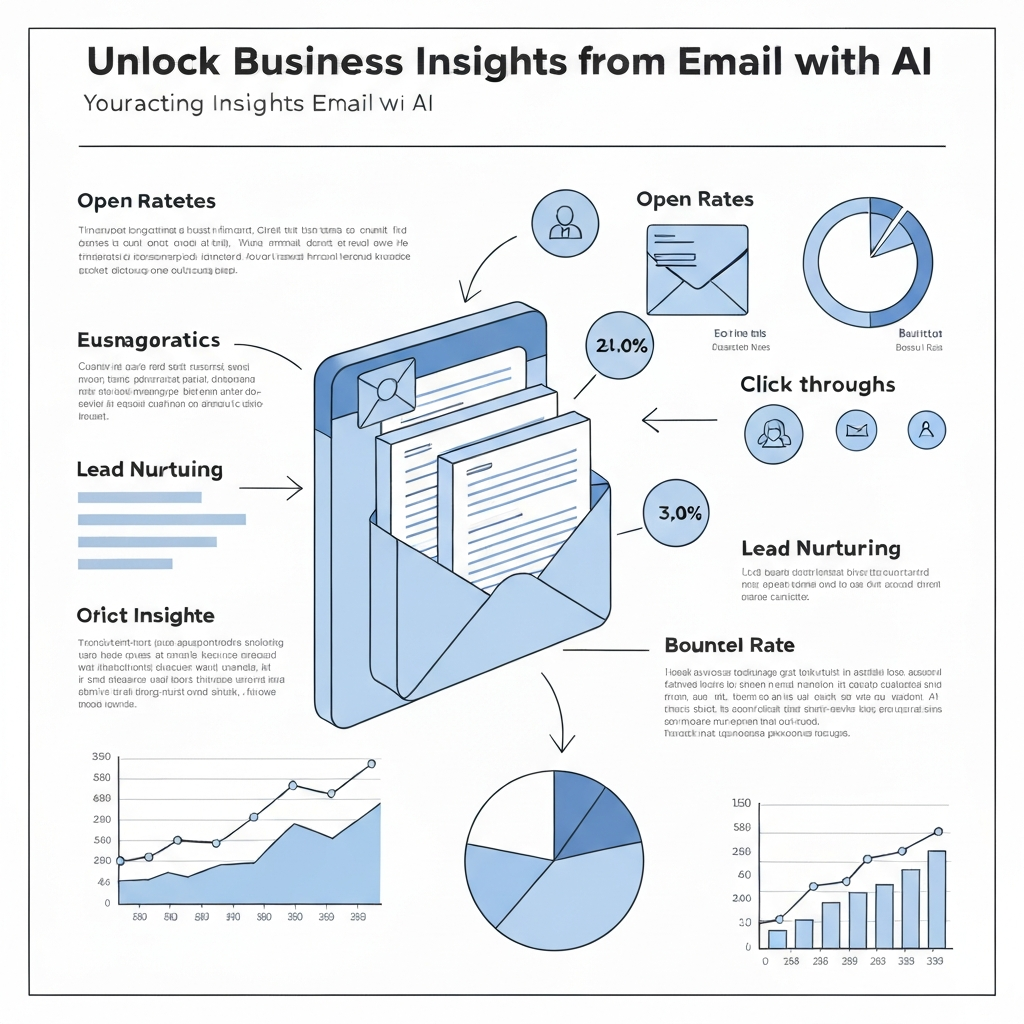
Tools that offer Intelligent Email capabilities can transform these raw data points into visual dashboards, making trends easy to spot. As Canary Mail Blog notes, "AI-powered email insights can inform decisions about customer relations strategies, sales opportunities, and even internal workflow efficiencies..."
Turning Email Insights into Actionable Business Strategies
The ultimate goal of extracting business insights from email is not just to know more, but to *do* more. These insights are the fuel for informed, strategic action that can drive tangible business results.
Improving Customer Experience and Retention
- Proactive Support: Identifying common customer pain points allows you to create FAQs, update documentation, or train support staff to address issues before they escalate.
- Personalized Outreach: Understanding individual customer needs and past interactions enables more tailored communication and offers, fostering stronger relationships.
- Product Development: Direct customer feedback on desired features or existing issues provides a clear roadmap for product improvements, ensuring you build what your customers actually want.
Boosting Sales and Revenue
- Lead Qualification: Identifying subtle cues of interest or need in prospect emails can help sales teams prioritize their efforts and tailor their pitches.
- Closing Deals Faster: Understanding objections or hesitations expressed in email allows sales reps to address them more effectively, potentially shortening the sales cycle. This ties into the importance of reply speed impact and informed responses.
- Identifying Upsell/Cross-sell Opportunities: Discussions about related needs or challenges can reveal avenues for offering additional products or services.
Enhancing Operational Efficiency
- Streamlining Workflows: Recognizing repetitive questions or bottlenecks in communication can lead to process improvements, better internal documentation, or automation of certain tasks.
- Improving Team Collaboration: Insights into how teams communicate can highlight areas where collaboration tools or training might be beneficial.
- Resource Allocation: Understanding where the majority of customer inquiries or internal discussions are focused can help allocate resources more effectively.
For example, if email analytics reveal a high volume of inquiries about a specific product feature, you might decide to create a detailed tutorial video or update your product's user interface. If sentiment analysis shows a dip in satisfaction related to order processing, you can investigate and optimize that specific operational workflow. Our article on Gmail automation and similar tools for other platforms can help implement some of these efficiency gains.
Practical Tips for Implementing Email Insight Gathering
Getting started with extracting business insights from email doesn't require a complete overhaul of your systems. Here are practical steps to begin:
- Define Your Goals: What specific questions do you want to answer? Are you focused on customer satisfaction, sales leads, product feedback, or operational issues? Clear goals will guide your analysis.
- Start Small and Focused: Don't try to analyze your entire email history at once. Begin with a specific project, team, or customer segment. Focus on one or two key types of insights you want to extract.
- Choose the Right Tools: Explore AI-powered email management solutions. Look for tools that offer sentiment analysis, keyword extraction, topic modeling, and reporting features. Consider solutions that integrate with your existing email client, whether it's Gmail, Outlook, or others. For instance, platforms offering AI virtual agent capabilities can be invaluable.
- Ensure Data Privacy and Security: Be mindful of privacy regulations and company policies when analyzing email content. Ensure your chosen tools comply with these standards and that you have appropriate permissions.
- Clean Up Your Inbox (Optional but Recommended): Before diving deep, consider decluttering. Unsubscribing from emails you no longer need can reduce the noise and make analysis more efficient.
- Train Your Team: If you implement new tools or processes, ensure your team understands their purpose and how to use them effectively.
- Iterate and Refine: Email analysis is an ongoing process. Regularly review your findings, adjust your analytical approach, and refine your strategies based on what you learn. Tools like a best email tracker for Gmail can sometimes offer complementary data on engagement, further enriching your understanding.
By taking a structured, iterative approach, you can gradually transform your email communication into a source of continuous learning and improvement.
Conclusion: The Future of Email as a Strategic Business Tool
Email has been a cornerstone of business communication for decades. While its form may evolve, its value as a repository of critical business data is undeniable. The challenge has always been extracting that value efficiently and effectively. With the advent of sophisticated AI technologies, this challenge is rapidly becoming a solvable opportunity.
By embracing AI for email analytics and data extraction from email, businesses can move beyond reactive communication to proactive strategy. You can gain deeper understanding of your customers, identify market shifts before they become mainstream, and optimize your internal operations for peak performance. The future of email is not just about sending and receiving messages; it's about leveraging those messages as a strategic asset, driving better decisions, fostering stronger relationships, and ultimately, achieving greater business success.
Start exploring the potential of your inbox today. The insights you need to grow and innovate are likely just an email away.
Frequently Asked Questions