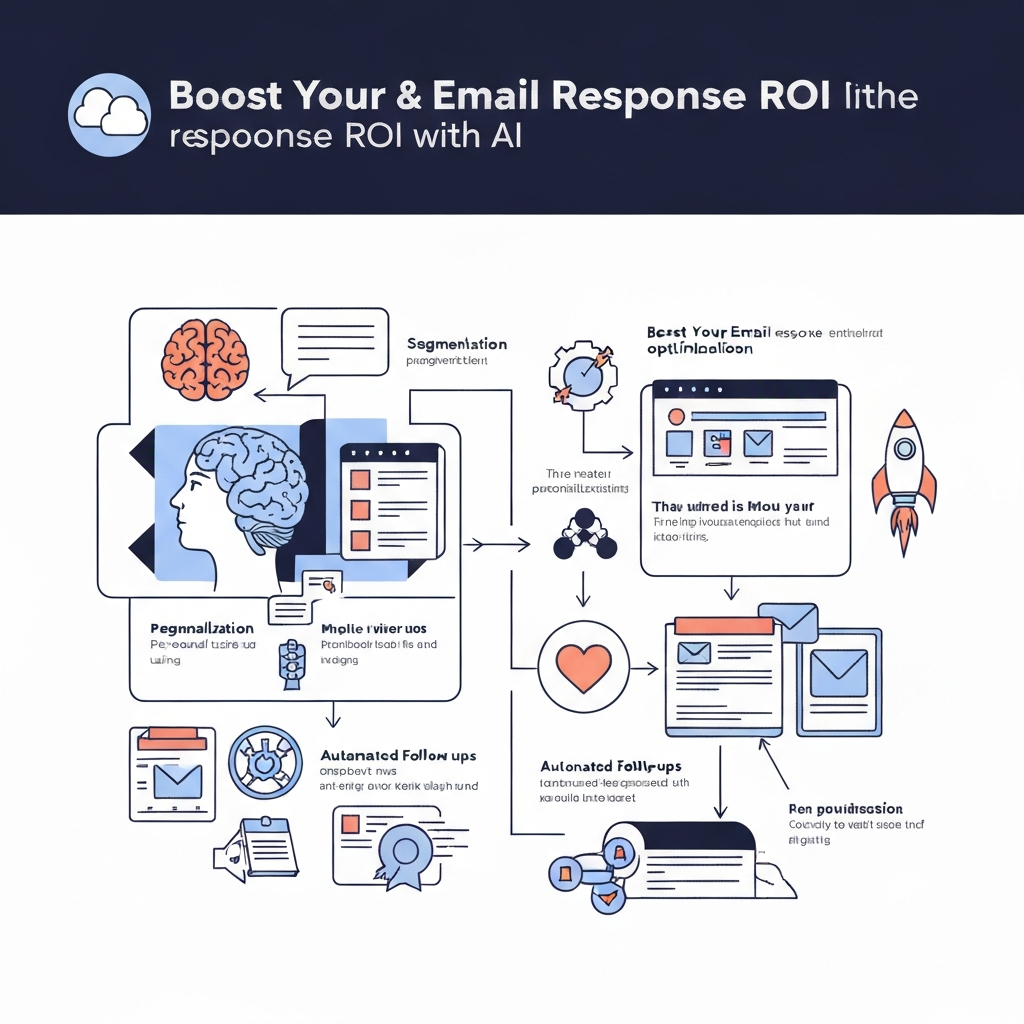
Boost Your Email Response ROI with AI

In today's fast-paced business world, email remains a primary communication channel. However, managing the sheer volume of daily messages, ensuring timely and effective responses, and extracting tangible value from these interactions can be a significant challenge. This is where the concept of email response ROI comes into play. It's not just about sending emails; it's about the return you get on the time, resources, and tools you invest in your email communication. Low response rates, delayed replies, and inefficient handling can drain productivity and lead to lost opportunities, directly impacting your bottom line. Fortunately, a powerful ally has emerged: Artificial Intelligence (AI). AI is revolutionizing how businesses manage their inboxes, offering sophisticated solutions to boost efficiency, enhance communication quality, and ultimately, maximize your email response ROI.
Understanding Email Response ROI: What it is and Why It Matters
At its core, Return on Investment (ROI) measures the profitability of an investment relative to its cost. When applied to email responses, email response ROI quantifies the value generated from your email communication efforts compared to the resources expended. This isn't just about sales emails; it encompasses customer service inquiries, internal communications, partnership outreach, and any other business-critical exchange via email.
The 'investment' in email response ROI includes:
- Time: The hours your team spends reading, composing, sending, and managing emails. This is often the largest, yet most overlooked, cost.
- Tools: The cost of email clients, CRM integrations, automation software, and any other technology used.
- Personnel: Salaries, training, and overhead for individuals involved in email communication.
- Training: Ensuring your team has the skills to communicate effectively via email.
The 'return' can manifest in various forms:
- Revenue Generation: Leads converted, sales closed, upsells achieved directly or indirectly through email.
- Customer Satisfaction & Loyalty: Prompt and helpful responses build trust and encourage repeat business.
- Operational Efficiency: Streamlined communication reduces internal friction and speeds up projects.
- Brand Reputation: Professional, timely email interactions enhance your company's image.
- Cost Savings: Reduced manual effort, fewer errors, and optimized resource allocation.
For businesses, especially those in sales, customer support, and client management, a high email response ROI is crucial. It signifies that your email strategy is not a drain but a powerful engine for growth and customer retention. Conversely, a low ROI indicates that valuable time and resources are being wasted, potentially hindering business objectives and customer relationships.
The High Cost of Slow Email Responses
In the digital age, patience is a scarce commodity. Customers, partners, and prospects expect swift communication. When businesses fail to deliver, the consequences can be severe, leading to a significant dip in your email response ROI and overall business performance.
Here’s a breakdown of the high costs associated with slow email responses:
- Lost Leads and Sales: Studies consistently show that the speed of response directly correlates with conversion rates. A potential client who doesn't receive a timely reply is likely to turn to a competitor. Research indicates that responding to leads within the first 5 minutes can increase conversion rates by up to 400%. When your response time stretches into hours or days, those opportunities evaporate.
- Decreased Customer Satisfaction and Loyalty: For existing customers, slow support responses translate into frustration and a feeling of being undervalued. This can erode loyalty, leading to churn and negative word-of-mouth. A Zendesk study found that 62% of companies believe customer service capabilities are a key driver of customer loyalty. Slow email responses directly undermine these capabilities.
- Damaged Brand Reputation: A reputation for slow or poor email communication can be difficult to shake. In an era of online reviews and social media, negative experiences spread quickly, deterring potential customers and partners.
- Reduced Employee Productivity: When inboxes overflow and prioritization is manual, employees spend an inordinate amount of time just managing emails. This includes searching for information, deciding what to tackle next, and dealing with repetitive queries. This time could be better spent on revenue-generating activities or strategic tasks.
- Missed Opportunities: Beyond direct sales, slow responses can mean missing out on crucial partnership opportunities, urgent requests from key stakeholders, or timely information needed for decision-making.
These issues highlight why response time optimization and improving overall business email efficiency are not mere operational tweaks but strategic imperatives for maximizing your email response ROI.
Introducing AI: Your Secret Weapon for Email Efficiency
The challenges of email management—volume, speed, and consistency—are precisely what Artificial Intelligence (AI) is designed to tackle. AI-powered tools are transforming inboxes from overwhelming task lists into streamlined, intelligent communication hubs. By leveraging machine learning, natural language processing (NLP), and automation, AI can significantly enhance business email efficiency and boost your email response ROI.
Unlike traditional automation that relies on predefined rules, AI can learn, adapt, and make intelligent decisions. This means it can understand context, predict user needs, and handle complex communication tasks with remarkable accuracy. For professionals, entrepreneurs, and sales teams drowning in emails, AI offers a much-needed respite and a powerful advantage.
Here’s how AI is changing the game:
- Automating Repetitive Tasks: AI can handle routine responses, categorize emails, and schedule follow-ups, freeing up human agents for more complex interactions.
- Enhancing Decision-Making: By analyzing email content and context, AI can help prioritize urgent messages, suggest optimal response strategies, and even predict the likelihood of a lead converting.
- Improving Communication Quality: AI can help craft clearer, more concise, and personalized messages, ensuring consistency in brand voice and professionalism.
- Providing Actionable Insights: AI tools can analyze email patterns, identify trends, and provide data-driven recommendations for improving communication strategies.
Integrating AI into your email workflow is no longer a futuristic concept; it's a practical strategy for gaining a competitive edge. By adopting these advanced email productivity tools and smart inbox solutions, businesses can move beyond simply managing emails to strategically leveraging them for growth.
AI Features That Directly Impact Email Response ROI
The power of AI in email management isn't abstract; it's delivered through specific, tangible features that directly contribute to a better email response ROI. These tools automate, assist, and optimize in ways that were previously unimaginable, allowing businesses to respond faster, smarter, and more effectively.
Smart Reply and Auto-Drafting
One of the most immediate benefits of AI is its ability to suggest replies or even draft entire emails. Based on the content of an incoming message, AI algorithms can generate contextually relevant responses, often providing a few options for the user to choose from. This dramatically reduces the time spent composing routine replies, ensuring faster turnaround times. For AI for sales emails, this means personalized outreach can be drafted much faster, increasing the volume of prospects you can engage with.
Intelligent Prioritization and Filtering
Inboxes are often chaotic. AI can act as an intelligent gatekeeper, analyzing incoming emails to determine their urgency and importance. It can automatically categorize messages, flag critical communications requiring immediate attention, and filter out spam or low-priority items. This ensures that your team focuses on what matters most, directly contributing to response time optimization and preventing critical messages from getting lost.
Email Summarization
Long email threads can be time-consuming to sift through. AI can quickly summarize lengthy conversations, extracting key points, action items, and decisions. This allows users to grasp the context of a thread rapidly without reading every single message, saving valuable time and improving understanding, especially in complex projects or customer interactions.
Sentiment Analysis
Understanding the tone of an email is crucial for crafting an appropriate response, particularly in customer service and sales. AI-powered sentiment analysis can detect the emotional tone of a message—whether it's positive, negative, or neutral. This insight helps your team tailor their responses, de-escalate tense situations, and provide more empathetic and effective communication, enhancing customer satisfaction and loyalty.
Automated Follow-ups and Nurturing
For sales and marketing teams, consistent follow-up is key. AI can automate the process of sending follow-up emails based on predefined triggers or schedules. It can also help nurture leads by sending personalized content at the right time, ensuring no opportunity falls through the cracks. This automation is a direct driver of increased conversion rates and improved ROI in email marketing.
AI for Sales Emails: Tailored Outreach at Scale
AI is revolutionizing how sales teams use email. Beyond drafting, AI can help identify the best prospects, personalize outreach messages based on prospect data, suggest optimal send times, and even analyze campaign performance to refine strategies. This capability allows sales professionals to engage more effectively with a larger number of leads, significantly boosting their productivity and the effectiveness of their email outreach.
For a comprehensive approach, consider leveraging advanced AI tools. Platforms offering an ai executive assistant can powerfully streamline your workflow, helping to manage these diverse email tasks efficiently. Tools like these integrate various AI capabilities to act as a central hub for intelligent email management, making them invaluable for boosting business email efficiency and overall email response ROI.
By integrating these AI features, businesses can transform their email communication from a time-consuming chore into a strategic asset, directly enhancing productivity and profitability.
Implementing AI Email Tools: A Step-by-Step Guide for Business
Adopting AI for email management doesn't have to be a complex, daunting overhaul. A strategic, phased approach ensures smoother integration and maximizes the chances of success. By following these steps, businesses can effectively leverage AI to enhance their email response ROI.
1. Audit Your Current Email Workflow and Identify Bottlenecks
Before diving into AI solutions, understand your current email landscape. What are your biggest pain points? Are response times too slow? Is volume overwhelming? Are certain types of emails consistently missed? Analyze your team's current processes, time spent on email tasks, and common communication challenges. This audit will highlight where AI can provide the most significant impact.
2. Define Clear Goals and Key Performance Indicators (KPIs)
What do you want to achieve with AI? Set specific, measurable, achievable, relevant, and time-bound (SMART) goals. For instance, "Reduce average customer support response time by 30% within three months" or "Increase sales email reply rates by 15% in the next quarter." These KPIs will be crucial for measuring your success later.
3. Research and Select Appropriate AI Tools
The market offers a wide range of AI-powered email tools, from integrated features within existing platforms (like Gmail or Outlook) to standalone applications and comprehensive suites. Consider:
- Functionality: Does it offer the specific features you need (e.g., smart reply, prioritization, summarization)?
- Integration: How well does it integrate with your existing CRM, project management tools, and other software?
- Scalability: Can the tool grow with your business needs?
- Ease of Use: Is it intuitive for your team to adopt?
- Cost: Does it fit within your budget, and what is the potential ROI?
Choosing the right foundation is essential; explore options for the best email for business that come with robust AI capabilities or integrate seamlessly with AI tools.
4. Pilot and Test with a Small Group
Don't roll out a new system to your entire organization immediately. Select a pilot group—perhaps a specific department or a small team—to test the chosen AI tools. This allows you to identify any unforeseen issues, gather user feedback, and refine your implementation strategy before a full-scale deployment.
5. Train Your Team Effectively
AI tools are only as good as their users. Provide comprehensive training to your team on how to use the new AI features. Educate them on the benefits, best practices, and how the AI complements, rather than replaces, their human judgment. Ensure they understand how to leverage AI for tasks like drafting, prioritizing, and responding, thereby improving business email efficiency.
6. Integrate and Scale Gradually
Once the pilot phase is successful and your team is trained, begin integrating the AI tools into your broader email workflows. Roll out the solution department by department or feature by feature. Continuously monitor performance against your defined KPIs and make adjustments as needed. Tools like an AI assistant for business can help manage the transition and adoption process.
By approaching AI implementation methodically, businesses can ensure that these powerful technologies are adopted effectively, leading to significant improvements in productivity and a measurable boost in their email response ROI.
Case Studies: Real-World Examples of Improved Email Response ROI with AI
The tangible benefits of AI in email management are best illustrated through real-world scenarios. Businesses across various sectors are already reporting significant improvements in efficiency, customer satisfaction, and revenue generation by integrating AI into their email strategies. These examples underscore how AI directly enhances email response ROI.
Case Study 1: A SaaS Company Enhances Sales Outreach
The Challenge: A growing SaaS company struggled with low response rates to their outbound sales emails. Their sales development representatives (SDRs) spent considerable time personalizing each email, but the volume of outreach was limited, and follow-ups were often inconsistent, leading to missed opportunities.
The AI Solution: The company implemented an AI tool designed for sales emails. This tool helped their SDRs by:
- Generating personalized email drafts based on prospect profiles and industry data.
- Identifying optimal times to send emails for maximum engagement.
- Automating follow-up sequences for leads who didn't initially respond.
- Prioritizing leads based on their engagement patterns and potential value.
The Results: Within six months, the company saw a 45% increase in open rates and a 30% boost in reply rates for their outbound campaigns. The SDRs were able to engage with 50% more prospects per week, leading to a 20% increase in qualified meetings booked. The time saved on manual drafting and follow-up allowed them to focus more on strategic prospecting and closing deals, significantly improving their email response ROI.
Case Study 2: An E-commerce Business Optimizes Customer Support
The Challenge: An online retailer faced a high volume of customer service emails, especially during peak seasons. Customers expected quick resolutions, but the support team was often overwhelmed, leading to longer wait times, increased customer frustration, and a rise in negative reviews.
The AI Solution: The e-commerce business integrated an AI-powered customer service platform that offered:
- Intelligent Ticket Prioritization: Automatically flagged urgent issues (e.g., shipping problems, payment failures).
- Smart Reply Suggestions: Provided agents with pre-written, context-aware responses for common inquiries.
- Automated Information Retrieval: Quickly pulled relevant order details or product information for agents.
- Sentiment Analysis: Helped agents understand the customer's emotional state to tailor their tone.
The Results: The average customer response time decreased by 40%. The customer satisfaction (CSAT) scores improved by 15%, as customers received faster and more accurate assistance. Support agents reported feeling less stressed and were able to handle approximately 25% more inquiries per day effectively. This improved efficiency and customer loyalty directly translated into a higher email response ROI for their customer service operations.
These examples demonstrate that AI is not just a theoretical concept for improving email communication. It provides practical solutions that yield measurable business outcomes, turning email from a cost center into a revenue driver and a key component of customer success.
Measuring Your Success: Tracking the ROI of Your AI Email Strategy
Implementing AI for email management is an investment, and like any investment, its success must be measured. To truly understand and demonstrate the value of your AI strategy, you need to track specific metrics that reflect improvements in efficiency, productivity, and business outcomes. This data is crucial for proving the email response ROI and justifying continued investment.
Key Metrics to Track for Email Response ROI:
- Average Response Time: This is perhaps the most direct measure. Compare the average time it takes to respond to emails before and after implementing AI. A significant reduction indicates improved efficiency.
- Response Rate: For sales and marketing emails, track the percentage of recipients who reply. AI-driven personalization and timely follow-ups can significantly increase this metric.
- Conversion Rates: For sales and lead generation efforts, measure how many email interactions lead to desired actions (e.g., demo requests, sign-ups, purchases). AI can help optimize campaigns for higher conversion.
- Customer Satisfaction (CSAT) Scores: While indirect, faster and more accurate email responses contribute to happier customers. Monitor changes in CSAT or Net Promoter Score (NPS) following AI implementation.
- Productivity Gains / Time Saved: Calculate the estimated hours saved per employee per week by AI automation. Multiply this by the average hourly wage to quantify cost savings. For example, if 5 employees save 2 hours each per week, that’s 10 hours of saved labor annually.
- Volume of Communications Handled: Track the number of emails processed, responded to, or resolved by your team (with AI assistance). An increase here, especially with stable or improved quality, shows enhanced capacity.
- Cost vs. Benefit Analysis: Ultimately, compare the total cost of your AI email tools and implementation (software, training, integration) against the quantifiable benefits (cost savings from time saved, revenue generated from increased conversions, reduced churn).
To effectively measure these metrics, ensure you have a baseline established before implementing AI. Consistent tracking over time will reveal trends and demonstrate the ongoing impact of your AI email strategy. Moreover, maintaining a clean and organized inbox through practices like inbox cleanup can provide more accurate data for measurement and ensure that AI tools can function optimally.
By diligently tracking these KPIs, you can clearly articulate the value of your AI-driven email efforts and make informed decisions to further optimize your email response ROI.
The Future of AI in Email Management and Response Optimization
The journey of AI in email management is far from over; it's continuously evolving. As AI technologies advance, we can expect even more sophisticated capabilities that will further transform how businesses communicate and interact via email. The future promises an email ecosystem that is not just efficient but also deeply intelligent and proactive.
Deeper Personalization and Contextual Understanding
Future AI will likely possess an even greater capacity to understand individual recipient preferences, communication styles, and historical interactions. This will enable hyper-personalized emails that resonate more deeply, moving beyond simple name-drops to truly tailored messaging that anticipates needs and builds stronger relationships. Imagine AI suggesting responses that perfectly match a client’s known communication style or urgency.
Predictive Communication and Proactive Engagement
Instead of just reacting to incoming emails, AI will increasingly predict user needs and proactively initiate communication. This could involve AI identifying a potential customer issue based on website activity or purchase history and sending a helpful email *before* the customer even realizes they need assistance. For sales, AI might predict when a lead is most likely to convert and trigger a targeted follow-up.
Seamless Integration and Ubiquitous Assistance
AI will become more seamlessly integrated into our daily workflows, often working in the background. Tools will evolve to offer assistance across multiple platforms and devices, providing consistent support whether you're on your desktop, mobile, or using a different collaboration tool. The lines between human and AI assistance will blur, with AI acting as an ever-present, intelligent co-pilot.
Enhanced AI for Sales and Marketing Automation
The application of AI in AI for sales emails and email marketing will become more advanced. Expect AI to play a larger role in A/B testing subject lines and content, optimizing send times for entire segments, identifying high-value leads with greater accuracy, and even managing complex, multi-touch campaign sequences autonomously.
Improved Security and Compliance
As email continues to carry sensitive information, AI will also play a crucial role in enhancing email security and compliance. AI can detect phishing attempts, identify potential data breaches, and help ensure that communications adhere to regulatory standards more effectively.
The ongoing evolution of AI in email management promises not just incremental improvements but a fundamental shift in how businesses leverage this vital communication channel. By staying abreast of these advancements and adopting AI tools, companies can ensure they remain at the forefront of business email efficiency and continue to maximize their email response ROI in the years to come.
In conclusion, the strategic adoption of AI is no longer an option but a necessity for businesses aiming to thrive in the digital landscape. By understanding the value of email response ROI, recognizing the costs of slow communication, and leveraging the power of AI-driven features, you can transform your email management from a burden into a powerful engine for growth. Start exploring AI solutions today, implement them thoughtfully, and begin measuring your success to unlock the full potential of your email communications.
```
Frequently Asked Questions
